
48.Why Should Only Sons Care for Parents? The Unspoken Struggle of Daughters in India

https://mysticalmomworld.com/when-moving-into-a-joint-family-feels-like-moving-into-your-past-struggles/Why Should Only Sons Care for Parents? The Unspoken Struggle of Daughters in India

In a country where traditions are deeply rooted and family values are celebrated, one question continues to echo in the hearts of millions of daughters — “Why can’t I take care of my parents in their old age?”
Why is it that a daughter’s love, responsibility, and emotional bond are overshadowed by social expectations? Why must she always prioritize her husband’s parents while being told to distance herself from her own?

It’s time we reflect on this emotional and societal imbalance that continues to exist even in modern India.

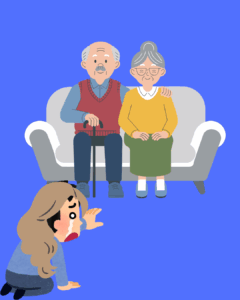
The Emotional Bond That Never Fades

A daughter may leave her home after marriage, but her heart never truly detaches from her parents.
She still worries about her mother’s health, her father’s loneliness, and the home where she grew up. Yet, society constantly reminds her — “You belong to another family now.”

This mindset hurts deeply. A daughter nurtured with love and care suddenly becomes an outsider to her own parents. She is expected to fulfill all duties for her in-laws but is silently judged if she wishes to do the same for her birth parents.

Isn’t love supposed to be equal?
Does marriage erase her right to be a daughter?

Cultural Expectations vs. Emotional Reality

Indian culture has always celebrated the bond between parents and children. But when it comes to caregiving responsibilities, there’s an invisible gender divide.
Sons are seen as the “caretakers” of parents, while daughters are expected to transfer their loyalty and service to another household.

However, real life tells a different story.
In countless homes, it is often the daughters who emotionally, financially, and physically support their parents — whether married or unmarried. Many parents find true comfort and empathy only in their daughters, who understand their pain with unmatched sensitivity.

Yet society rarely acknowledges their sacrifices.

When Responsibility Becomes a Right

Taking care of parents is not a gendered duty; it’s a human responsibility.
Every child — son or daughter — has an equal moral and emotional right to be there for the people who gave them life.

When a daughter contributes to her parents’ well-being, it should be seen as her right, not a favor.
She doesn’t do it out of obligation but out of gratitude, love, and connection.

Unfortunately, traditional mindsets still treat daughters’ support as interference — as though she’s breaking boundaries or disrespecting her husband’s family.

But caring for one’s parents doesn’t reduce respect for in-laws. It simply balances compassion and fairness.

The Modern Daughter: Balancing Two Families

Today’s women are strong, independent, and emotionally intelligent.
They handle careers, homes, children, and family relationships with grace.
They contribute equally to the household — financially and emotionally — and yet, many face criticism if they wish to take care of their own aging parents.

Why this hypocrisy?
If a husband can take care of his parents without judgment, why can’t a wife do the same?

In many cases, daughters even provide more emotional support to their parents than sons who live far away or remain uninvolved. Still, society chooses to overlook this truth.

It’s time we redefine equality not only in workplaces but also within families.

The Silent Pain of Aging Parents

Another painful reality is the helplessness of parents who depend emotionally on their daughters.
They fear reaching out for help, knowing society might question their daughter’s loyalty to her marital home.
They suppress their needs, suffer in silence, and often say — “We’re fine, don’t worry about us” — while struggling with loneliness and health issues.

Is this the price of giving birth to a daughter?

In truth, many parents today are breaking this mindset. They are proud to accept care and support from their daughters. But societal judgment still lingers, forcing many to hide their daughter’s efforts out of fear of gossip or blame.

What Needs to Change

To bring real equality, we must change the conversation — at home, within marriages, and across generations.

  • Encourage both sons and daughters to share caregiving responsibilities.

  • Normalize daughters visiting, supporting, and living with their parents when needed.

  • Educate husbands and in-laws to see their daughter-in-law’s parents as extended family, not outsiders.

  • Teach children that love and responsibility are not divided by gender.

A daughter’s care for her parents should be celebrated, not criticized.

A Daughter’s Love is Not Conditional

Love doesn’t recognize “his” parents and “her” parents.
When a daughter takes care of her parents, she is simply continuing what she’s done since childhood — caring, supporting, and loving unconditionally.

She’s not doing it out of rebellion or disobedience. She’s doing it because her heart refuses to forget where she came from.

A daughter can be an ideal wife, a loving mother, a caring daughter-in-law, and a devoted daughter — all at once. Society just needs to allow her that freedom.

Conclusion: Love Beyond Boundaries

Let’s stop defining duties by gender and relationships by social norms.
Let’s start valuing emotions, fairness, and empathy.
Every daughter deserves the right to care for her parents without guilt, judgment, or permission.

After all, parents never distinguished between their children when they gave love, food, or education.
So why should daughters be denied their right to love back the same way?

It’s time India opens its eyes —
Because a daughter’s love is as pure, strong, and rightful as a son’s.

15.How Education Empowers Women and Earns Them Respect at Their In-Laws Home

How Education Empowers Women and Earns Them Respect at Their In-Laws Homehttps://mysticalmomworld.com/when-everything-feels-messed-up-mothers-sy/


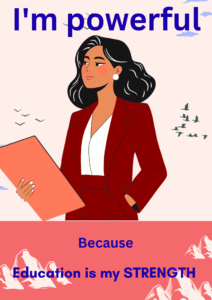
Education is more than a degree – it’s the light that guides a woman toward dignity strength, and freedom. In many parts of the world, especially in India, a woman’s value is often judged by her role as a wife or daughter-in-law. But when she is educated, that perception changes.

Education gives her the power to speak with confidence, think independently, and live with purpose. It changes her life, her home, and even the mindset of those around her.

Let’s explore how education empowers women and elevates their respect and value – especially at their in-laws place.

How Education Empowers Women

  1. Education gives her a unique identity

An educated woman is not defined by others – she defines herself. She is not just someone’s daughter or wife; she becomes a person of individuality and intelligence.

When she enters her in-laws home, she is seen as capable, thoughtful, and strong. People respect her opinions and trust her judgement. Her education becomes her invisible crown – one that commands respect without a word.

“Education turns a woman from being dependant to being defined.”

    2. Confidence: The True Ornament of an Educated Woman

Confidence is not inherited – it is earned through awareness and learning. Education gives women the ability to express themselves gracefully, even in difficult situations.

At her in-laws place, this confidence helps her handle family matters with maturity. She communicates with respect, stands firm in her beliefs, and knows how to balance emotions and logic.

She doesn’t need validation – her calm confidence earns admiration.

   3. Financial Independence: Her Key to Freedom

Education opens doors to financial freedom.

Whether she becomes a teacher, doctor, designer, or entrepreneur – or even works from home – an educated woman has the ability to contribute to her family’s income.

This independence brings two things: self-respect and security. Her in-laws view her not as a dependent, but as a contributor to the family’s growth.

Even if she chooses to be a homemaker, her financial literacy helps her manage expenses wisely and plan for a better future.

 4. Education Builds Emotional Strength and Wisdom

Emotional intelligence is often overlooked – yet it’s one of education’s greatest gifts. An educated woman learns how to manage her emotions, think critically, and solve problems logically.

At her in-laws home, this wisdom makes her a stabilizing force. She understands when to speak, when to listen, and how to turn conflicts into conversations.

Her calmness earns her immense respect and makes her the heart of the household.

5. Breaking Blind Traditions and Embracing Awareness

Education gives women the courage to ask “why” before saying “yes.” It doesn’t make her rebellious – it makes her aware.

Se understands the importance of traditions but also  knows how to modify outdated practices that hold women back.

Her ability to balance culture with modern thinking makes her both grounded and respected.

“An educated woman doesn’t destroy traditions; she refines them with understanding.”

6. Education Helps Her Raise an Enlightened Generation

When a woman is educated, she becomes the foundation of an empowered family.

She knows how tp guide her children with compassion, teach them values, and inspire them to chase their dreams.

Her education ensures her children grow up emotionally intelligent, respectful, and ambitious.

In this way, she doesn’t just uplift her own life – she uplifts generations.

“Educate a woman, and you educate a family. Educate a family, and you build a stronger nation.”

7. Education Commands Respect Without Demanding It

Respect that comes from education is not forced – it’s earned naturally.

An educated woman is graceful, self-aware, and confident. She doesn’t need to prove her worth; her behavior and decisions reflect it.

At her in-laws place, she is seen as wise, capable, and emotionally balanced – qualities that bring her genuine respect and trust.

8. Education Removes Fear and Dependency

Uneducated women often live with fear – of being misunderstood, rejected, or unable to survive alone. Education eliminates those fears.

It gives her strength to speak, think independently, and stand on her own if needed. This self-reliance transforms her position in her in-laws home – she is no longer seen as a burden but as a strong, reliable support system.

9. Education Promotes Equality and Harmony

An educated woman believes in equality – not competition. She knows how to maintain harmony in relationships and encourages mutual respect between family members.

This balanced attitude helps her create peace in the household while ensuring she is never silenced or sidelined.

Her understanding bridges generations and strengthens family unity.


Conclusion

Education is a woman’s strongest empowerment tool. It turns silence into strength, hesitation into confidence, and dependence into dignity.

At her in-laws home, education helps her earn respect not by demanding it, but by deserving it.

It gives her grace in her actions, wisdom in her words, and pride in her identity.

“When you educate a woman, you don’t just change one life – you transform generations.”

Let’s continue to encourage and support women’s education – because empowered women create empowered families and stronger societies.

What’s one life lesson you learned through education? Share your story in the comments below – your words might inspire another woman today!

When Everything Feels Messed Up: A Mother’s Symphony