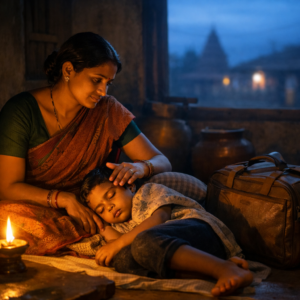
68. Teaching Kids Gratitude in a World That Wants More

https://mysticalmomworld.com/why-modern-parenting-feels-heavier-than-ever-before/Teaching Kids Gratitude in a World That Wants More


Modern parenting feels like walking on a tightrope. Children today grow up in a world filled with choices, screens, advertisements, endless desires, and constant comparison. Everything around them says, “You need more to be happy.”

But deep down, we know the truth — happiness doesn’t come from having more. It comes from appreciating what you already have.

Gratitude is a skill, a mindset, a habit, and a value that can shape a child’s entire life. It builds emotional strength, reduces anxiety, improves relationships, and teaches kids to find joy in simple things.

But how do we teach gratitude in a world that constantly pushes children to want more?
This blog explores practical, gentle, and powerful ways to raise grateful, grounded, and emotionally aware kids.

1. Why Gratitude Matters More Than Ever

Today’s generation faces challenges we never imagined:

  • Constant comparison through social media

  • Endless advertisements targeting children

  • Peer pressure at school

  • Fast, instant, and disposable lifestyles

  • Short attention spans

  • Emotional overwhelm

Gratitude acts like an anchor.
It teaches kids to pause, reflect, appreciate, and feel content.

Psychologists say grateful kids are:

  • More confident

  • Less stressed

  • Kinder

  • Better at relationships

  • More emotionally stable

  • Less likely to throw tantrums over small things

Gratitude doesn’t make life perfect.
It simply makes life peaceful.

2. Kids Learn Gratitude by Watching, Not Listening

Children absorb what they see more than what they’re told.
If we constantly complain, compare, or express dissatisfaction, they learn the same.
If we pause, smile, and appreciate, they copy that too.

Try modelling simple gratitude behaviors like:

  • Saying “I’m thankful for this meal.”

  • Showing appreciation to helpers, workers, teachers.

  • Pausing to admire nature.

  • Expressing gratitude for small things, not just gifts.

When kids see gratitude in action, they understand it naturally.

3. Slow Down Their Life — Just a Little

Kids today are overstimulated — devices, games, videos, busy schedules.
This constant “rush” reduces their ability to notice joy in little things.

Slow life down with simple practices:

  • Unplug for one hour a day

  • Encourage outdoor play

  • Keep certain days free of activities

  • Allow them to experience boredom

  • Encourage creative play instead of gadgets

Stillness gives children room to feel, observe, and appreciate.

4. Teach Kids to Name Their Blessings

Most children know what they want, but not what they have.
Shift that mindset by asking gentle questions:

  • “What made you smile today?”

  • “Who helped you today?”

  • “What is something you feel lucky to have?”

  • “What did you enjoy the most today?”

This simple practice helps kids recognize small joys like:

  • Warm food

  • A cozy bed

  • A hug

  • A friend

  • A sunny morning

Awareness is the first step to gratitude.

5. Create a Gratitude Ritual at Home

Kids love rituals because they make everything feel special.
You can choose any one (or more):

Gratitude Jar

Every night, each family member drops one note about something they’re grateful for.

3 Good Things Before Bed

Say three good things that happened that day — even small ones.

Weekly Gratitude Walk

Take a walk and notice nature, the sky, trees, birds, fresh air.

Thank You Time at Dinner

Everyone thanks another family member for something they did that day.

Little rituals create lifelong habits.

6. Teach Them to Appreciate Effort, Not Just Objects

Kids often see only the end product — food, toys, clothes, school bags.
They rarely see the effort behind it.

Explain gently:

  • Who grows the food

  • Who cooks it

  • Who stitches their clothes

  • Who drives the bus

  • Who cleaned the park

  • Who made their toys

Once kids understand effort, they value things and people differently.
Gratitude grows naturally.

7. Let Kids Experience “Not Getting Everything”

Gratitude dies when everything comes too easily.
It grows when children learn patience, waiting, and earning.

You can teach this by:

  • Having a simple reward system

  • Setting boundaries on toys

  • Delaying instant gratification

  • Encouraging them to save

  • Letting them work for small treats

Kids don’t become grateful by receiving more.
They become grateful by understanding the meaning of what they receive.

8. Encourage Helping Others

Gratitude flourishes when kids see life from different perspectives.

Simple activities like:

  • Donating old toys or clothes

  • Feeding stray animals

  • Helping a friend

  • Making handmade cards for teachers

  • Sharing snacks at school

  • Helping younger siblings

Teach empathy, kindness, and appreciation for what they have.
Children who help others naturally become more thankful.

9. Teach Them the Language of Gratitude

Kids often feel gratitude but don’t know how to express it.
Give them simple words and sentences like:

  • “Thank you for helping me.”

  • “I appreciate this.”

  • “This means a lot to me.”

  • “I’m grateful for you.”

  • “I love how this makes me feel.”

Teaching them these phrases builds emotional intelligence.

10. Celebrate Small Acts of Thankfulness

Whenever your child shows gratitude, acknowledge it warmly:

  • “I’m proud of you for sharing.”

  • “That was really kind of you.”

  • “You thanked her so nicely.”

  • “You noticed something beautiful — I love that.”

Positive reinforcement makes kids repeat grateful behavior.

Conclusion

Teaching kids gratitude in today’s fast, demanding world is one of the greatest gifts a parent can give.
It shapes them into kind, confident, emotionally strong, and mindful individuals who don’t chase happiness — they create it.

Remember, gratitude is not a lesson taught in one day.
It’s a gentle, daily practice.
It’s the way we live, speak, behave, and appreciate life.

When kids learn gratitude, they learn peace.
And when they learn peace, they carry it with them for a lifetime.

51. Watching Ramayana with Kids: Teaching Sanatan Dharma Through Timeless Mythology

https://mysticalmomworld.com/shree-satyanarayana-swami-puja-at-godhuli-time-a-journey-of-faith-family-and-11-full-moons-of-devotion/Watching Ramayana with Kids: Teaching Sanatan Dharma Through Timeless Mythology

There’s something deeply comforting about sitting together with your children, watching the Ramayana unfold on screen — the divine story of Lord Rama, Sita, Lakshmana, Hanuman, and the triumph of dharma over adharma.

As parents, when we explain to our kids who is who — who Rama is, why Ravana fell, what loyalty means through Hanuman’s devotion — we’re not just narrating mythology. We’re passing on the foundation of Sanatan Dharma, the eternal truth that guides humanity across time.

The joy of watching the Ramayana with our children is more than family entertainment — it’s a sacred act of cultural and spiritual continuity.

1. The Magic of Ramayana in Every Home

Every Indian home has at least one memory of watching or listening to the Ramayana — either through grandparents, television, or temple recitations.

When we now watch it with our children, it’s like reviving the same divine rhythm. We see our kids’ eyes widen with wonder when Lord Rama breaks Shiva’s bow, when Hanuman flies across the ocean, or when Sita enters the forest with unwavering faith.

In that moment, the Ramayana stops being an old story. It becomes alive again, teaching new hearts the same ancient wisdom.

2. Introducing Kids to “Who Is Who” in the Epic

Children are naturally curious. When they ask, “Who is that monkey?” or “Why is Ravana bad?”, we get the chance to explain the symbolism behind each character.

  • Lord Rama represents dharma — doing the right thing, even when it’s difficult.

  • Sita Mata stands for purity, patience, and strength of womanhood.

  • Lakshmana symbolizes loyalty and service.

  • Hanuman embodies devotion, humility, and courage.

  • Ravana, despite his power, shows how ego destroys greatness.

By explaining these roles, we help children understand not just characters, but values and morals that shape life.

3. Why Ramayana Is the Base of Sanatan Dharma

The Ramayana is not merely a story — it’s a spiritual blueprint of how to live life according to Sanatan Dharma (the eternal truth).

It teaches that:

  • Righteousness always prevails.

  • Truth, loyalty, and compassion form the roots of life.

  • Respect for elders and duty toward society bring balance.

Every act of Rama and every verse of Valmiki carries timeless guidance. When children watch it, even in simple cartoon or serial form, their subconscious absorbs these values — forming a moral and spiritual foundation that lasts forever.

4. Ramayana as a Parenting Tool

In today’s world of screens, games, and instant gratification, it’s hard to teach patience, faith, or gratitude. The Ramayana becomes a beautiful parenting bridge.

Instead of lecturing, we can use scenes to explain values:

  • When Rama leaves Ayodhya, teach them about sacrifice.

  • When Bharata rules with Rama’s sandals, teach humility.

  • When Hanuman serves Rama selflessly, teach devotion.

Kids remember visual stories far longer than spoken advice. The Ramayana gives parents a living classroom for life lessons.

5. Creating Emotional Bonds Through Cultural Learning

When we watch the Ramayana as a family, something magical happens. Generations connect. Elders recall the 1987 Ramanand Sagar version, parents share what it meant to them, and children see the sparkle in everyone’s eyes.

That shared emotion builds stronger family bonds rooted in tradition. The home fills with divine energy — the kind that brings peace, purpose, and togetherness.

6. Ramayana Is Not About Religion — It’s About Values

One of the most beautiful truths about the Ramayana is that it doesn’t belong to just Hindus; it belongs to humanity. Its messages transcend religion:

  • Truth over falsehood

  • Love over hatred

  • Duty over desire

These principles are the pillars of Sanatan Dharma — the eternal way of living with harmony. Teaching this to children early helps them become compassionate, grounded, and strong individuals.

7. Encouraging Questions Builds Awareness

When children ask questions like, “Why did Rama go to the forest?” or “Why did Ravana take Sita?” — don’t rush to finish the story. Let them think. Let them wonder.

Explain how every action has a reason and consequence. These conversations awaken a child’s spiritual intelligence, helping them distinguish between right and wrong in real life too.

8. Ramayana Teaches Modern Lessons Too

Though written thousands of years ago, the Ramayana’s teachings fit perfectly in modern times:

  • Respecting parents even when life feels unfair.

  • Valuing promises, even in difficulty.

  • Standing for truth, even when alone.

  • Treating women with dignity.

In a world driven by material success, these values form the moral compass that keeps the next generation grounded and kind.

9. Storytelling Time Becomes Prayer Time

When you sit down with your kids to watch or narrate the Ramayana, light a small diya, offer flowers, or begin with a prayer. Turn it into a ritual of connection with divinity.

As they grow, these memories will anchor them to their roots. The sound of “Jai Shri Ram” will remind them of home, peace, and purpose — not just a phrase, but a feeling of belonging to something eternal.

10. Passing Sanatan Values to the Next Generation

Our ancestors didn’t just read scriptures; they lived them. The Ramayana, Mahabharata, and Bhagavad Gita were living traditions, not just books on a shelf.

When we watch the Ramayana with our kids today, we’re continuing that unbroken chain — keeping Sanatan Dharma alive through understanding, storytelling, and devotion.

Because one day, when our children grow up and sit with their kids to explain “who is who,” the same divine cycle will continue — full of light, wisdom, and faith.

Final Thought: Ramayana Is the Heartbeat of Sanatan Culture

Watching the Ramayana with your kids isn’t just a family activity — it’s a spiritual inheritance.
It connects generations, nurtures values, and reminds us that dharma, love, and truth always win.

So the next time you sit down to watch Lord Rama’s journey, remember — you’re not just watching a story.
You’re teaching your children the foundation of being Sanatani — to walk with truth, serve with devotion, and live with compassion.

12. A Sleepless Night and a Journey of Love

12. A Sleepless Night and a Journey of Love: A Mother’s Day Before Maramma Jatrehttps://mysticalmomworld.com/feeling-like-the-odd-one-out/

A Sleepless Night and a Journey of Love


Some days in a mother’s life are not just busy – they are unforgettable journeys of love, patience, and strength. Last night was one such day for me. We had slept very late, almost around 1 AM, yet by 6 AM, I was up again. The alarm clock was my mind itself – reminding me that I had to send my elder daughter to school and my husband to the office. No matter how tired I was, my heart didn’t let me rest because my family’s day had to start smoothly.

Morning Hustle Before Maramma Jatre

I prepared breakfast and packed the snacks box for my elder one. She had only a half day at school since it was Maramma Jatre, a local festival that brings spiritual energy and cultural celebration to our town. My little angel woke up with sleepy eyes, rubbing them gently as if pleading for five more minutes of sleep. But as always, her sweet smile and cheerful spirit made the morning brighter. We laughed, teased each other, and started the day with joy instead of rush.

Soon, my elder one and husband left for school and office, leaving me with my younger one still fast asleep. That peaceful silence – right after everyone leaves – is something every mother knows. I used it wisely to finish my packing, as that very day we were leaving for our hometown.

The Packing Marathon

“Oh God,” I kept saying to myself, “there’s so much to pack!” Every mother has this invisible checklist in her head, yet somehow we always feel something is forgotten. I wanted to ensure everything was perfect, from clothes to medicines, from kids snacks to chargers – every detail mattered because the journey was 14 hours long by train.

My husband was advised by the doctor not to lift heavy luggage, so I divided everything smartly into two trolleys, one tuck-back bag, and a laptop bag. It might sound simple, but the mental load of remembering every small thing for a family trip is enormous. Yet, as mothers, we carry it with pride.

By afternoon, my elder one returned from school. I decided not to go to the shop that day – family came first. I fed both my kids a wholesome lunch and started preparing homemade food for the train journey. I wanted them to eat healthy, comforting meals – something warm from home, not station food.

A Quick Dash for Gifts and Goodbyes

In the middle of this chaos, I realized I needed to buy a gift for my niece. So I took both my kids and went out shopping. Thankfully, we finished everything within 20 minutes! Back home, I made sure the house was clean, all switches turned off, gas checked, and things safely locked before leaving for 10 – 11 days.

It’s funny – every time I leave my house, I whisper a little prayer: “Deva, protect this home, and bless our journey.”

The Rush to the Railway Station

Our cab arrived right on time. My husband was to meet us directly at the station after work. The cab driver drove quite fast, overtaking vehicles as if we were on a racetrack. In a calm yet firm tone, I told him in kannada, “Anna, namge urgent yenu ella” (Brother, we’re not in a hurry). He smiled and slowed down. It was a small but beautiful moment of human connection – a reminder that respect and kindness always travel faster than speed.

We reached the station about half an hour before my husband. I waited with my daughters in the waiting hall, watching people rush around – some emotional goodbyes, some excited reunions, and some, like me, holding onto both children and luggage, managing everything in silence.

The Challenge of Luggage and Steps

When my husband arrived, I asked him to just hold the kids hands while I managed the luggage. I was shocked when the coolie asked for almost the price of our train ticket to carry our bags! Without hesitation, I decided to carry it all myself.

There were 28 steps to climb – two trolleys, a tuck-back, and a laptop bag – and I carried them all, one by one. My husband watched with pride and a little worry, but I felt empowered. At that moment, I wasn’t just a mother or a wife – I I was my own strength. When we finally reached our platform, I took a deep breath and silently thanked Lord Ganesha for the energy.

A Train Ride Full of Emotions

Once we boarded the train, everything seemed to settle. The rhythmic sound of the train wheels always has a magical way of calming the mind. My parents kept calling repeatedly, insisting that they would pick us up and that I should drop them and take the car. I said “No,” even though my parents were heartbroken. It’s strange how love sometimes means saying no for the right reasons.

As the train started moving, my kids said they were hungry. I opened the food boxes I had packed lovingly – rotis, sabji, some sweets – we shared our meal as the train swayed gently. There’s something sacred about eating food cooked with love during a journey – it feels like home even when you’re miles away.

Motherhood Never Sleeps

After dinner, I helped my daughters settle into their berths. The younger one struggled to fall asleep, tossing and turning. It was past 2 AM, when she finally dozed off. I couldn’t open my laptop or do any pending work. My husband and I kept a close watch on our elder one, who was sleeping alone on the opposite berth. She’s 7 now – independent but still our baby. We both made sure no one disturbed her and that she didn’t roll off the seat.

As the train moved through the silent night, I stayed awake, gazing at the dimly lit compartment. I saw people of every kind – some kind-hearted, some with rough behaviour, some unhygienic, some caring. Each face told a story, each story a reflection of humanity itself.

Somewhere between exhaustion and contentment, I realized – a mother’s journey never pauses. Even in sleepless nights and heavy luggage, in forgotten items and endless checklists, there’s a quite beauty – the beauty of giving without expecting.

Reflections of Gratitude

By morning, I was still awake but my heart was full. Watching my family sleep peacefully – my husband beside me, my daughters in their blankets – I felt blessed. Life might be tiring, but it is also tender. Every challenge, every sleepless night, every bit of struggle brings us closer to the meaning of love and responsibility.

This was not just a train journey – it was a journey of motherhood, a story of endurance and care that  every woman silently lives through.

And as the first rays of dawn touched the train window, I whispered a silent prayer to Mahadev – “Thank you for the strength, thank you for this love.”

Takeaway:

Every day in a woman’s life is a story of divine balance – between duty and love, strength and softness, self-care and sacrifice. Whether you are traveling, working, or just managing your family’s routine, remember – you are enough, you are strong, and your journey itself is sacred.

https://en.wikipedia.org/wiki/Maramma