68. Teaching Kids Gratitude in a World That Wants More

https://mysticalmomworld.com/why-modern-parenting-feels-heavier-than-ever-before/Teaching Kids Gratitude in a World That Wants More

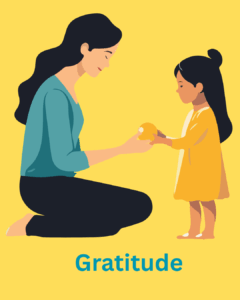
Modern parenting feels like walking on a tightrope. Children today grow up in a world filled with choices, screens, advertisements, endless desires, and constant comparison. Everything around them says, “You need more to be happy.”

But deep down, we know the truth — happiness doesn’t come from having more. It comes from appreciating what you already have.

Gratitude is a skill, a mindset, a habit, and a value that can shape a child’s entire life. It builds emotional strength, reduces anxiety, improves relationships, and teaches kids to find joy in simple things.

But how do we teach gratitude in a world that constantly pushes children to want more?
This blog explores practical, gentle, and powerful ways to raise grateful, grounded, and emotionally aware kids.

1. Why Gratitude Matters More Than Ever

Today’s generation faces challenges we never imagined:

  • Constant comparison through social media

  • Endless advertisements targeting children

  • Peer pressure at school

  • Fast, instant, and disposable lifestyles

  • Short attention spans

  • Emotional overwhelm

Gratitude acts like an anchor.
It teaches kids to pause, reflect, appreciate, and feel content.

Psychologists say grateful kids are:

  • More confident

  • Less stressed

  • Kinder

  • Better at relationships

  • More emotionally stable

  • Less likely to throw tantrums over small things

Gratitude doesn’t make life perfect.
It simply makes life peaceful.

2. Kids Learn Gratitude by Watching, Not Listening

Children absorb what they see more than what they’re told.
If we constantly complain, compare, or express dissatisfaction, they learn the same.
If we pause, smile, and appreciate, they copy that too.

Try modelling simple gratitude behaviors like:

  • Saying “I’m thankful for this meal.”

  • Showing appreciation to helpers, workers, teachers.

  • Pausing to admire nature.

  • Expressing gratitude for small things, not just gifts.

When kids see gratitude in action, they understand it naturally.

3. Slow Down Their Life — Just a Little

Kids today are overstimulated — devices, games, videos, busy schedules.
This constant “rush” reduces their ability to notice joy in little things.

Slow life down with simple practices:

  • Unplug for one hour a day

  • Encourage outdoor play

  • Keep certain days free of activities

  • Allow them to experience boredom

  • Encourage creative play instead of gadgets

Stillness gives children room to feel, observe, and appreciate.

4. Teach Kids to Name Their Blessings

Most children know what they want, but not what they have.
Shift that mindset by asking gentle questions:

  • “What made you smile today?”

  • “Who helped you today?”

  • “What is something you feel lucky to have?”

  • “What did you enjoy the most today?”

This simple practice helps kids recognize small joys like:

  • Warm food

  • A cozy bed

  • A hug

  • A friend

  • A sunny morning

Awareness is the first step to gratitude.

5. Create a Gratitude Ritual at Home

Kids love rituals because they make everything feel special.
You can choose any one (or more):

Gratitude Jar

Every night, each family member drops one note about something they’re grateful for.

3 Good Things Before Bed

Say three good things that happened that day — even small ones.

Weekly Gratitude Walk

Take a walk and notice nature, the sky, trees, birds, fresh air.

Thank You Time at Dinner

Everyone thanks another family member for something they did that day.

Little rituals create lifelong habits.

6. Teach Them to Appreciate Effort, Not Just Objects

Kids often see only the end product — food, toys, clothes, school bags.
They rarely see the effort behind it.

Explain gently:

  • Who grows the food

  • Who cooks it

  • Who stitches their clothes

  • Who drives the bus

  • Who cleaned the park

  • Who made their toys

Once kids understand effort, they value things and people differently.
Gratitude grows naturally.

7. Let Kids Experience “Not Getting Everything”

Gratitude dies when everything comes too easily.
It grows when children learn patience, waiting, and earning.

You can teach this by:

  • Having a simple reward system

  • Setting boundaries on toys

  • Delaying instant gratification

  • Encouraging them to save

  • Letting them work for small treats

Kids don’t become grateful by receiving more.
They become grateful by understanding the meaning of what they receive.

8. Encourage Helping Others

Gratitude flourishes when kids see life from different perspectives.

Simple activities like:

  • Donating old toys or clothes

  • Feeding stray animals

  • Helping a friend

  • Making handmade cards for teachers

  • Sharing snacks at school

  • Helping younger siblings

Teach empathy, kindness, and appreciation for what they have.
Children who help others naturally become more thankful.

9. Teach Them the Language of Gratitude

Kids often feel gratitude but don’t know how to express it.
Give them simple words and sentences like:

  • “Thank you for helping me.”

  • “I appreciate this.”

  • “This means a lot to me.”

  • “I’m grateful for you.”

  • “I love how this makes me feel.”

Teaching them these phrases builds emotional intelligence.

10. Celebrate Small Acts of Thankfulness

Whenever your child shows gratitude, acknowledge it warmly:

  • “I’m proud of you for sharing.”

  • “That was really kind of you.”

  • “You thanked her so nicely.”

  • “You noticed something beautiful — I love that.”

Positive reinforcement makes kids repeat grateful behavior.

Conclusion

Teaching kids gratitude in today’s fast, demanding world is one of the greatest gifts a parent can give.
It shapes them into kind, confident, emotionally strong, and mindful individuals who don’t chase happiness — they create it.

Remember, gratitude is not a lesson taught in one day.
It’s a gentle, daily practice.
It’s the way we live, speak, behave, and appreciate life.

When kids learn gratitude, they learn peace.
And when they learn peace, they carry it with them for a lifetime.
37.When Even Refilling Feels Like a Task

https://mysticalmomworld.com/why-patience-is-the-strongest-parenting-skill/When Even Refilling Feels Like a Task

There comes a phase in life when even the smallest acts feel like an uphill battle.
You wake up, look at the bike’s petrol meter, and sigh — not because the tank is empty, but because you are. You know it needs refilling, but somehow, you delay it. Not because you forgot, but because you don’t have the energy to care anymore.

It’s strange how life mirrors our exhaustion. The way you keep riding on low fuel, hoping somehow it’ll take you just one more mile — just one more day — before you finally stop. Maybe you tell yourself, “I’ll fill it tomorrow.”
But tomorrow comes, and so does another reason not to.

The Silent Struggle Behind Everyday Tasks

People see you going to work, smiling at familiar faces, taking care of responsibilities — but they don’t see the inner struggle of holding yourself together.
You keep showing up, but not because you’re full of energy or hope. You show up because you have no choice.

When life keeps demanding from you — time, patience, emotions, care — there comes a time when you have nothing left to offer.
You start avoiding even the smallest things — a call you don’t want to answer, a message you don’t have the energy to reply to, a conversation you’re too drained to continue.

The Meaning of “Empty Tank” in Life

There’s a deep truth in that small act of checking your bike’s petrol every time — it’s not about fuel, it’s about control.
You’re checking if you still have a little left in you to move forward, or if it’s time to stop.
You don’t want to refill — because refilling means effort, and effort means facing everything again.

Sometimes, you just wish the tank would run empty on its own, so you could stop without guilt. Because it’s easier to stop when you’re forced to, than when you choose to.

The Exhaustion No One Understands

People think exhaustion comes from work or stress. But no — real exhaustion comes from living without being seen, without being understood, without being helped.
You keep doing things for others — family, work, society — but when it’s time for someone to refill you, the world suddenly goes silent.

You become your own push, your own reason, your own rescuer — till even that self starts running on fumes. You keep checking if you’re still “okay,” but deep inside, you know — you’re running on empty.

When Life Has to Push You

You start realizing that sometimes, life itself has to push you.
It gives you signs — a sudden breakdown, an unexpected failure, a quiet night where you burst into tears for no reason — that’s life’s way of saying, “Stop. Refuel. Rest.”
But we don’t listen. We just keep riding, pretending everything’s fine, ignoring the red light blinking inside.

And one day, when you can’t move anymore, you finally understand — life was never asking you to quit; it was asking you to pause.

The Guilt of Doing Nothing

In today’s world, even taking a break feels wrong.
When you stop, your mind starts whispering — “You’re wasting time… others are doing so much more.”
But they don’t know the battles you fight silently. They don’t see that waking up, breathing, surviving another day — sometimes that’s your biggest victory.

So what if your tank is empty? So what if you’re too tired to refill?
You’re still standing. That itself is enough for now.

Finding Peace in Stillness

Sometimes, life doesn’t need more movement — it needs stillness.
Sit by yourself. Feel your breath. Don’t think about who’s moving faster or who has more fuel.
This pause is not failure; it’s healing.

Your soul is asking for time — time to rebuild, to feel again, to find meaning beyond daily struggles. Don’t fight it. Allow yourself to slow down.

Because when you refill your soul, not your schedule, that’s when real energy returns.

From Exhausted to Enlightened

Every breakdown teaches you something — that your body, your mind, your spirit all have limits.
The same way your bike can’t run forever without fuel, you can’t keep giving without receiving. You can’t keep running on empty.

You don’t need a grand reason to take care of yourself.
Sometimes, you just need a reminder that you matter too.
That your exhaustion isn’t weakness; it’s proof of how much you’ve carried, how long you’ve held on, and how far you’ve come.

The Quiet Message of an Empty Tank

So next time you check your petrol and sigh — smile instead.
Because that small act says something powerful: you’re aware. You’re still here.
Even if you’re tired, even if you can’t refill today — you’re still moving somehow. And that means life hasn’t given up on you yet.

Maybe one day, you’ll find the strength to refill again — not just your bike, but your soul.
Till then, let life push you a little.
Because even when you run out of fuel, hope finds a way to start the engine again.

Conclusion

Exhaustion doesn’t mean you’re weak. It means you’ve been strong for too long.
And even if you’re riding on an empty tank today, remember — this phase is not your end. It’s just life asking you to stop, breathe, and find your way back to yourself.

24. When You Feel You’re Falling Behind AS a Mother

There are days when motherhood feels heavy — not because you don’t love your children, but because the world around you seems to be racing ahead.
You scroll through social media and see parents proudly posting their children’s awards, travel pictures, or achievements. You smile politely, but deep inside, a quiet voice whispers, “Why do I feel stuck? Why does it seem like everyone else is doing better?”

If this thought has ever crossed your heart, take a deep breath — you’re not alone.

1. You’re Not Behind — You’re Building Differently

Success in motherhood doesn’t always look like medals or milestones.
Sometimes it looks like holding your child when they cry, listening when they can’t express, or simply being there when the world feels unkind.

You might not have a perfect routine or a high-achieving child, but you’re giving your kids something far more powerful — stability, compassion, and love.

These things don’t make noise, but they make character.

So no, you’re not behind. You’re just building differently — from the heart, not the scoreboard.

2. Every Child Has Their Own Time to Bloom

It’s easy to compare your child’s growth, grades, or talents with others. But remember — every child carries their own rhythm.
Some bloom early, showing brilliance in school or sports.
Others take time to discover their unique path — and that’s perfectly okay.

Just like seasons, children have their own timing.
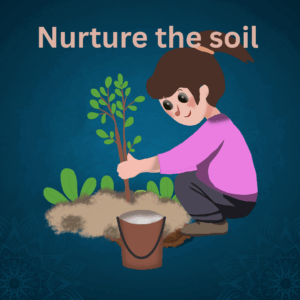
Your role as a mother is not to rush the season, but to nurture the soil — to create an environment where your child feels safe to grow at their own pace.

When your heart feels restless, remind yourself: flowers don’t bloom by comparison — they bloom by nurture.

3. Comparison Is a Thief of Joy

Social media often shows you only the highlight reel — not the behind-the-scenes struggles.
The mother you envy might also cry in silence, fight her own battles, or feel lost in her own ways.

Every parent carries unseen burdens.
Some are financial, some emotional, some spiritual.
You’re not the only one navigating storms behind closed doors.

Comparison never shows the full truth — it only steals the peace that belongs to your present moment.
So, protect your heart from the noise. Focus on your lane, your rhythm, and your small wins.

4. The “Stuck Zone” Is Often the “Healing Zone”

When life feels paused — when everything around you moves but your own world doesn’t — it’s often a sign that something deeper is shifting within you.
Maybe it’s teaching you patience.
Maybe it’s preparing you for a new version of yourself.

Stillness doesn’t mean failure.
It’s the universe giving you a sacred pause to realign with what truly matters.
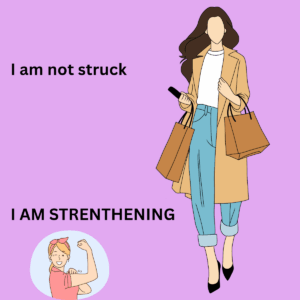
So instead of saying “I’m stuck,” try saying “I’m strengthening.”

You are learning endurance, faith, and emotional balance — things that success can’t teach but struggles can.

5. Your Efforts Are Not Invisible

Motherhood rarely comes with appreciation badges.
Your efforts — the sleepless nights, the silent sacrifices, the emotional battles — may not be recognized today, but they are shaping your child’s inner world in ways you cannot yet see.

The world might celebrate external success, but your quiet dedication is the foundation on which your children will someday stand tall.
Every hug, every “it’s okay,” every time you stayed calm instead of giving up — that’s your victory.

One day, when your child grows and looks back, they’ll realize you were the reason they could keep going.

 6. Redefine What “Success” Means in Your Journey

Success as a mother isn’t about being perfect — it’s about being present.
It’s about showing up, even on the hard days.
It’s about forgiving yourself for not being “enough” because, in truth, you already are.

Let’s redefine success:

  • It’s not having perfect kids, but raising kind ones.

  • It’s not competing with other families, but creating a peaceful home.

  • It’s not about fast progress, but about steady, loving growth.

Your motherhood journey is sacred — it’s not meant to look like anyone else’s.

7. You’re Doing Better Than You Think

When you doubt yourself, look at your children.
They may not say it, but their comfort around you, their laughter, their safety — all reflect your love and effort.

Motherhood doesn’t need external validation.
Your love is the proof of your success.
And every single day you rise again — tired, hopeful, loving — you are winning in ways the world cannot measure.

8. A Gentle Reminder Before You Go

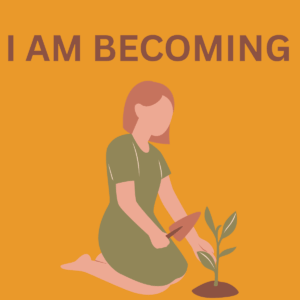
You are not losing.
You are becoming.
Your story isn’t late — it’s unfolding.

There will be brighter days ahead, ones where your patience turns into blessings, your pain into wisdom, and your sacrifices into strength.
Keep faith in your journey. Keep nurturing your roots.

Because one day, everything you’re praying for will bloom — right in front of you — and you’ll realize you were never behind at all.

In Summary:

When you feel like you’re falling behind as a mother, remember — your timeline is divine.
You’re raising hearts, not robots.
You’re building souls, not resumes.
You’re teaching love, not competition.

That’s not falling behind. That’s creating a legacy.

1. A Mother’s Sunday Symphony: Juggling Tantrums…

A Mother’s Sunday Symphony: Juggling Tantrums…https://mysticalmomworld.com/dividing-house-chores-changed-my-peace-parenting-and-practice/

A Mother’s Sunday Symphony: Juggling Tantrums…Sunday. The world itself sounds like a promise of rest, a pause from the hectic rhythm of the week. But for  mother of two – one 7 years old and full of energy, and another 2 years old and brimming with curiosity – Sunday is less of a pause and more of a symphony of responsibilities, love, and chaos.

This is the story of one such Sunday.

  • Morning: The Menu of Love

The day begins early. The little one tugs at my  saree, chanting her favourite demand; “Amma, take me, I don’t want food!”

A Mother’s Sunday Symphony: Juggling Tantrums…


Meanwhile, my 7 years old insists that Sundays must mean something special – not the regular breakfast.

So, I become not just a mother, but also a master chef of wishes. Within minutes, the kitchen is filled with the aroma of crispy dosas, coconut chutney, and hot milk. For the elder one, i secretly add an extra treat – chocolate pancakes.

But cooking with two kids isn’t always picture-perfect. The toddler throws tantrums if I ask her to eat, runs around, cries, restless and demanding at the moment. If I raise my voice even slightly, she bursts into tears – and those tears aren’t simple. They often end with her nose blocked, coughing, and catching a cold that lingers for 15 to 20 days. Every word I speak has to be measured, every correction has to be soft.

The elder one doesn’t quite understand these delicate pauses. When I stop midway to calm her sister, she gets irritated. She asks endless questions – sometimes innocent, sometimes downright silly. And when I don’t answer, she repeats them louder, more annoyingly, until I sigh in exhaustion. Yes, I know these “annoying questions” are her way of seeking my time, my attention.

Still, the first bite of dosa and pancake brings smiles, that’s all the morning magic I need to keep going.

  • Afternoon Adventure: 21 kilometers of Commitment

If motherhood is a test of patience, then long-distance weekend classes are the exam paper. My elder one has odissi dance class on Sundays, 21 kilometers away. The younger one is also thrilled about the destination as the dance gurukul is a piece of art, a scent of divine and gives a warm goan feeling.

With a snack bag packed, a water bottle filled, and my toddler’s favorite toy in hand, we start the ride. On the way the elder one rehearses her dance steps in the car, her eyes shining with excitement. The younger one grumbles, throws mini tantrums, cries for attention, and finally dozes off on my lap – giving me a few minutes of peace.

It’s not just a car ride. It’s a moving classroom of love and endurance. One child learns discipline through dance, while the other tests patience with restlessness. And me? I learn resilience – again and again.

By the time we reach the class, I’m both tired and proud. Watching my daughter’s tiny feet match rhythm to taala (beats), I feel the exhaustion of 21 kilometers vanish in the serene music.

  • Afternoon Strength: Physical Training and the Cycling Battle

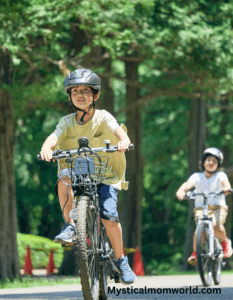
On the way back home, we stop for a session of outdoor physical activity and cycling in nature away from the city. Our day is still far from over. My husband and I believe in keeping the kids physically active by running, stretching, and simple sports.

But the real battle is cycling. My 7-year-old wants to give up. Pedaling feels like a mountain to her, balancing seems impossible, and every small fall feels like the end of the world. She says “Amma, I don’t want to cycle anymore”.

And yet, I insist. Not because I want to force her, but I know the day she finally pedals without falling will be the day she discovers her strength. Her sister, meanwhile, copies her – running with tiny steps, clapping when we cheer, making sad face when she falls, laughing at her own mistakes.

Two children, two worlds. One afraid of falling, another too little to even know what failure means.

I manage to responsibly handle the characters of spectator, referee, cheerleader and a coach at the same time. The sun is warm, the grass is green and the red soil ground making the surroundings fil the air with so much of love. I realise how precious this is – not just training the body, but also training the heart to stay joyful, even when life feels hard.

  • Evening: The Smile Hour

Evening is my favourite time. In our home we call it “Chai time”.

It’s not about gadgets or TV. It’s about board games, storytelling, drawing silly cartoons, sharing jokes, dancing our heart out and doing bhajan that don’t always make sense but always end in laughter and a smile from the core of our heart.

My elder daughter tells me about a new dance step, while my little one scribbles on the wall – her own version of art. I sigh, then laugh, because someday these scribbles will stop, but the memory will remain etched in my heart.

This smile hour is where all the day’s tiredness melts into giggles.

  • Night Finale: India vs. Pakistan
  •                          

Just when I think the day is winding down, the India-Pakistan cricket match begins.

I am a person who can stay hungry for such match. My elder one is trying to understand the match rules and players, meanwhile, younger one doesn’t actually understand cricket, but she claps every time we cheer. Me and my husband discussing the overs, sixes, fours, and wickets.

I am again having lots of roles to perform at the same time here. A cricket fan who doesn’t want to miss out on any ball, a mother who doesn’t want her kids to starve or let them sleep empty stomach. My juggle between making food, refilling water, and sneaking glances at the screen.

The living room turns out to be a  mini stadium. Every six hit by opposite team gave us a mini heart attack, every wicket debated, and every laugh shared.

And as the clock ticks past midnight, I look around at my family. Elder one is dozed of counting on wickets, meanwhile, the younger one wants to lay on me for a good sleep while I am wide awake with sparkling eyes.  Tired me, yes, but also glowing with the fullness of this Sunday.

  • Reflection of a Mother’s  Sunday

To the world, it may look like chaos – cooking multiple menus, managing tantrums, driving 2 kilometers, enduring silly questions, cheering while handling cycling battles, laughing in the evening, and staying up late for cricket.

But to me, it’s a symphony of love. Every demand met, every tear wiped, every mile driven, every giggle shared is a note in the melody of motherhood.

Sunday’s don’t give me rest. But they give me something more valuable – memories that will last a lifetime.

Because one day, my children will grow. Dance classes will end, silly questions will fade, tantrums will disappear, and dosa demands will turn into cafe outings.

But I will always remember these Sundays – the little chaos, the long drives, the tears the smiles, the questions, the failures, and the victories.

And that, I believe is the real win – bigger than any cricket match.

If you are a mother reading this, tired from cooking different meals, answering endless questions, handling tantrums, or trying to balance work, home, and your own dreams – know this: you are not alone.

Our children may not remember every dosa we made, every ride we drove, or every time we sacrificed our rest. But they will remember the feeling of being lived, protected, and heard.

Motherhood is not about perfection. It’s about patience when we are exhausted, laughter in the middle of chaos, and strength when we feel like giving up.

So, the next time your toddler cries over nothing, or your 7-year-olx refuses to cycle, or your Sunday feels like a marathon – remind yourself: this is love in action. Messy, noisy, tiring…but unforgettable.

And one day, when the house is quite, you will look back at these Sundays and smile – because you created not just routines, bur memories that shaped your children’s world.

“Creative activities like singing with your child not only strengthen emotional bonds but also improve overall well-being—a perspective supported by studies on music and motherhood.”https://www.rcm.ac.uk/research/projects/musicandmotherhood