
77. Why Your Mind Feels Full Even When You Haven’t Done Anything

Why Your Mind Feels Full Even When You Haven’t Done Anything
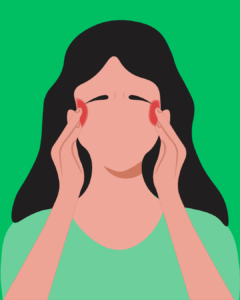
The Strange Feeling of Being Mentally Exhausted

Have you ever woken up, looked at the clock, and suddenly realized you haven’t done anything meaningful yet—but your mind already feels full?

You feel tired, irritated, unfocused, and emotionally drained.
You keep asking yourself, “Why am I feeling like this? I haven’t even started my day properly.”

This is more common today than ever before.
Your mind is working nonstop even on days when your body isn’t.

Let’s break down why your mind feels full and how you can clear that invisible mental weight.

1. The Mind Is Working Even When the Body Isn’t

Most people think rest means sitting down or not doing physical work. But your mind doesn’t stop. It keeps processing:

  • worries

  • responsibilities

  • fears

  • guilt

  • unfinished tasks

  • emotional stress

This invisible work makes your mind feel full, even when the day hasn’t been hectic.

2. The Pressure of Constant Decision-Making

Your brain makes thousands of micro-decisions every day:

  • What to cook?

  • When to clean?

  • What time to pick kids?

  • How to manage money?

  • What to prioritize first?

This is called decision fatigue, and it’s one of the biggest reasons your mind feels crowded and heavy.

Not doing “big tasks” doesn’t matter—your brain is still burning energy deciding everything else.

3. Emotional Work Takes More Energy Than Physical Work

People underestimate emotional load. But managing emotions—your own and others’—is draining.

Emotional work includes:

  • calming kids

  • handling family expectations

  • managing conflicts

  • suppressing feelings

  • staying patient

  • being the support system for everyone

You might not run a marathon…
but inside, your heart and brain are running nonstop.

No wonder your mind feels full.

4. The Pressure to Be Available 24/7

Today’s lifestyle demands that you must always be reachable, responsible, and ready.

As a parent, partner, or homemaker, you’re constantly on alert:

  • “Did I forget something?”

  • “What if someone needs me?”

  • “Did I upset anyone?”

  • “Did I finish all tasks?”

This keeps your mind in fight-or-flight mode, draining your energy even while you’re sitting still.

5. Carrying Yesterday’s Stress Into Today

Sometimes, your mind isn’t tired from today.
It’s tired from yesterday, last week, or even months of stress you never released.

Unprocessed emotional baggage piles up like clutter:

  • old arguments

  • unresolved problems

  • past trauma

  • self-criticism

  • disappointments

  • fear of the future

Even when you’re resting, your mind is replaying everything.

This creates mental clutter, making your mind feel full even before the day begins.

6. Too Many Open Tabs in the Brain (Just Like a Phone)

Think of your mind as a smartphone with too many apps running in the background.

Even if you’re not actively “using” them, they drain the battery.

You might be thinking about:

  • finances

  • kids’ future

  • work pressure

  • managing home

  • goals

  • relationships

  • self-doubt

All these tabs stay open. No wonder your mind gets overloaded.

7. You’ve Forgotten How to Pause

Today we don’t allow ourselves:

  • silence

  • slow mornings

  • lazy afternoons

  • saying “no”

  • doing nothing without guilt

Your body is sitting, but your mind is sprinting.

A real pause isn’t just stopping the body—it is calming the brain.

Most people haven’t done that in years.

8. You Are Caring for Everyone Except Yourself

If you’ve been functioning for a long time without emotional rest, your mind becomes like a container with no space left.

You give, give, give… and forget to refill.

Signs you need mental rest:

  • irritability for no reason

  • feeling heavy inside

  • forgetting things

  • losing focus

  • waking up tired

  • feeling emotionally numb

  • crying without a trigger

These are clear signals that your mind feels full from emotional imbalance.

9. The World Is Too Loud for a Sensitive Mind

Noise isn’t only sound.
Noise is:

  • people’s expectations

  • social media pressure

  • negative people

  • chaotic environments

  • constant comparison

For a sensitive person, this “noise” becomes too much.

Even a normal day feels overwhelming.

10. How to Empty Your Mind and Create Mental Space

Here’s how to release mental clutter:

1. Offload thoughts on paper (brain dump)

Write everything that’s in your mind.
This immediately reduces clutter.

2. Finish one small task at a time

Not multitasking frees mental energy.

3. Take micro-breaks

2 minutes of slow breathing works wonders.

4. Do one thing daily only for yourself

It resets your emotional system.

5. Practice the “3-Item Rule”

Only focus on completing 3 things a day. Not 30.

6. Limit emotional labour

Stop absorbing everyone’s emotions.

7. Give your mind silence

Even 5 minutes of complete quiet resets your mind.

Conclusion: Your Mind Is Not Weak—It’s Overworked

If your mind feels full even when you haven’t done anything, it means you’re carrying invisible weight every single day.

You’re not lazy.
You’re not slow.
You’re not failing.

You’re simply exhausted on the inside.

Be gentle with yourself.
Your mind deserves the same rest your body gets.

https://mysticalmomworld.com/the-invisible-exhaustion-of-raising-two-kids-without-breaks/

 

76. The Struggle of Being a Highly Sensitive Person in a Loud Household

The Struggle of Being a Highly Sensitive Person in a Loud Household

Some people can live comfortably in chaos — loud voices, nonstop movement, unexpected noises, constant interruptions, and the daily messiness of family life. But for a highly sensitive person, a loud household is not just discomfort.
It is a silent emotional battle.

Highly sensitive people feel everything more intensely — sounds, emotions, energy, conflict, and even the tone of someone’s voice. What seems “normal” or “nothing” to others can feel overwhelming, heavy, and mentally draining for them.

If you are a highly sensitive person in a loud household, you know the struggle well.
You are tired, overstimulated, misunderstood, and often blamed for simply being sensitive.

This blog is a piece of emotional comfort — to let you know that what you feel is real, valid, and more common than you think.

1. Noise Doesn’t Just Distract a Sensitive Person — It Burns Out Their Nervous System

For most people, noise is just sound.
For a highly sensitive person, noise becomes:

  • pressure

  • tension

  • mental heaviness

  • internal chaos

  • emotional fatigue

Simple sounds like:

  • TV running

  • kids yelling

  • family arguments

  • loud cooking noises

  • multiple people talking

  • doors banging

  • constant movement

can create sensory overload.

This overstimulation makes the brain feel like it’s running a marathon even while sitting still.

A loud household can turn a normal day into a day of emotional survival.

2. People Don’t Understand Why You Get Overwhelmed

One of the hardest struggles is the lack of understanding from others.

You hear things like:

  • “It’s just noise, stop overreacting.”

  • “Why do you get irritated so fast?”

  • “You’re too sensitive.”

  • “Kids are kids, you should get used to it.”

  • “You’re always complaining.”

They don’t understand that sensitivity is not a choice.
You are not irritated — you are overstimulated.
You are not complaining — you are overwhelmed.
You are not weak — you are wired differently.

A highly sensitive person in a loud household often ends up suppressing their needs just to avoid judgment.

3. Emotional Sensitivity Makes Household Conflicts Ten Times Harder

Noise is only one part of the struggle.
The emotional energy inside a loud household — arguments, misunderstandings, tension — affects sensitive people much more deeply.

You feel:

  • the shift in mood

  • the sharpness in someone’s tone

  • the unspoken anger

  • the stress everyone carries

  • the chaos inside the home

Your body absorbs emotions like a sponge.

Even a small conflict can sit in your mind for hours or days.
And this emotional overload leads to mental exhaustion.

4. The Constant Responsibility Drains Sensitive Parents Even More

If you are a parent who is highly sensitive, raising children in a loud household becomes twice as hard.

Kids are naturally noisy.
They shout, cry, fight, run, and demand attention.

A sensitive parent ends up feeling:

  • drained

  • guilty

  • overstimulated

  • helpless

  • emotionally tired

  • mentally suffocated

You love your kids deeply, but your nervous system collapses with constant noise and unpredictability.

This doesn’t make you a bad parent.
This makes you a highly sensitive parent trying your best in a loud world.

5. You Are Forced to Stay Strong Even When Your Brain Is Begging for Quiet

Highly sensitive people don’t get the luxury to “switch off.”
Even when they try to rest, the environment continues:

  • footsteps

  • banging items

  • doors opening and closing

  • phone calls

  • TV sounds

  • kids crying

  • relatives talking loudly

Your brain doesn’t get a break.
So your exhaustion becomes deeper, heavier, and more silently painful.

And because no one sees this internal struggle, you hide it.

6. The Guilt of Wanting Silence Is Real

A highly sensitive person in a loud household often carries guilt.

Guilt for needing space.
Guilt for craving silence.
Guilt for not matching the family’s energy.
Guilt for getting tired easily.
Guilt for being different.

But your need for quietness is not selfish.
It is self-preservation.
Your nervous system needs calm the way others need excitement.


7. You Try to Adjust — But It Comes with Emotional Cost

Sensitive people constantly adjust themselves:

  • lowering their expectations

  • ignoring overstimulation

  • smiling through chaos

  • pretending noise doesn’t bother them

  • softening reactions

  • suppressing emotions

  • accepting discomfort

  • absorbing extra responsibility

But adjusting every day takes a toll.
It creates emotional burnout — a silent, internal collapse.

8. You Are Not Alone — And There Are Ways to Cope

While you cannot always control the noise, you can control how you protect yourself emotionally and mentally.

Here are gentle ways to cope:

 Create a quiet corner

A dedicated space where you can breathe, sit, reset.

 Use earplugs or noise-cancelling headphones

Not to escape your family — but to protect your mind.

 Take micro-breaks

Even 5 minutes of silence can reset your energy.

 Lower self-criticism

You are not “too sensitive.” You are highly aware.

 Communicate with family

Explain kindly — not defensively — how noise affects your mental energy.

 Practice grounding

Deep breathing, slow walks, or quiet rituals.

 Reduce overstimulation

Less screen noise, fewer overlapping activities, small changes that help.

Your sensitivity is not a weakness.
It is a unique way of experiencing the world — deeply, beautifully, intensely.

A Gentle Reminder

Being a highly sensitive person in a loud household is not easy.
You’re fighting a battle no one sees.
You carry emotions no one understands.
You absorb energy no one notices.
And you get overwhelmed in ways others never will.

But you are not broken.
You are not dramatic.
You are not fragile.

You are simply wired differently — and that wiring deserves respect, care, and quiet spaces to breathe.

You are doing your best.
And that is enough.

https://mysticalmomworld.com/how-to-stay-calm-when-life-feels-completely-overwhelming/

37.When Even Refilling Feels Like a Task

https://mysticalmomworld.com/why-patience-is-the-strongest-parenting-skill/When Even Refilling Feels Like a Task

There comes a phase in life when even the smallest acts feel like an uphill battle.
You wake up, look at the bike’s petrol meter, and sigh — not because the tank is empty, but because you are. You know it needs refilling, but somehow, you delay it. Not because you forgot, but because you don’t have the energy to care anymore.

It’s strange how life mirrors our exhaustion. The way you keep riding on low fuel, hoping somehow it’ll take you just one more mile — just one more day — before you finally stop. Maybe you tell yourself, “I’ll fill it tomorrow.”
But tomorrow comes, and so does another reason not to.

The Silent Struggle Behind Everyday Tasks

People see you going to work, smiling at familiar faces, taking care of responsibilities — but they don’t see the inner struggle of holding yourself together.
You keep showing up, but not because you’re full of energy or hope. You show up because you have no choice.

When life keeps demanding from you — time, patience, emotions, care — there comes a time when you have nothing left to offer.
You start avoiding even the smallest things — a call you don’t want to answer, a message you don’t have the energy to reply to, a conversation you’re too drained to continue.

The Meaning of “Empty Tank” in Life

There’s a deep truth in that small act of checking your bike’s petrol every time — it’s not about fuel, it’s about control.
You’re checking if you still have a little left in you to move forward, or if it’s time to stop.
You don’t want to refill — because refilling means effort, and effort means facing everything again.

Sometimes, you just wish the tank would run empty on its own, so you could stop without guilt. Because it’s easier to stop when you’re forced to, than when you choose to.

The Exhaustion No One Understands

People think exhaustion comes from work or stress. But no — real exhaustion comes from living without being seen, without being understood, without being helped.
You keep doing things for others — family, work, society — but when it’s time for someone to refill you, the world suddenly goes silent.

You become your own push, your own reason, your own rescuer — till even that self starts running on fumes. You keep checking if you’re still “okay,” but deep inside, you know — you’re running on empty.

When Life Has to Push You

You start realizing that sometimes, life itself has to push you.
It gives you signs — a sudden breakdown, an unexpected failure, a quiet night where you burst into tears for no reason — that’s life’s way of saying, “Stop. Refuel. Rest.”
But we don’t listen. We just keep riding, pretending everything’s fine, ignoring the red light blinking inside.

And one day, when you can’t move anymore, you finally understand — life was never asking you to quit; it was asking you to pause.

The Guilt of Doing Nothing

In today’s world, even taking a break feels wrong.
When you stop, your mind starts whispering — “You’re wasting time… others are doing so much more.”
But they don’t know the battles you fight silently. They don’t see that waking up, breathing, surviving another day — sometimes that’s your biggest victory.

So what if your tank is empty? So what if you’re too tired to refill?
You’re still standing. That itself is enough for now.

Finding Peace in Stillness

Sometimes, life doesn’t need more movement — it needs stillness.
Sit by yourself. Feel your breath. Don’t think about who’s moving faster or who has more fuel.
This pause is not failure; it’s healing.

Your soul is asking for time — time to rebuild, to feel again, to find meaning beyond daily struggles. Don’t fight it. Allow yourself to slow down.

Because when you refill your soul, not your schedule, that’s when real energy returns.

From Exhausted to Enlightened

Every breakdown teaches you something — that your body, your mind, your spirit all have limits.
The same way your bike can’t run forever without fuel, you can’t keep giving without receiving. You can’t keep running on empty.

You don’t need a grand reason to take care of yourself.
Sometimes, you just need a reminder that you matter too.
That your exhaustion isn’t weakness; it’s proof of how much you’ve carried, how long you’ve held on, and how far you’ve come.

The Quiet Message of an Empty Tank

So next time you check your petrol and sigh — smile instead.
Because that small act says something powerful: you’re aware. You’re still here.
Even if you’re tired, even if you can’t refill today — you’re still moving somehow. And that means life hasn’t given up on you yet.

Maybe one day, you’ll find the strength to refill again — not just your bike, but your soul.
Till then, let life push you a little.
Because even when you run out of fuel, hope finds a way to start the engine again.

Conclusion

Exhaustion doesn’t mean you’re weak. It means you’ve been strong for too long.
And even if you’re riding on an empty tank today, remember — this phase is not your end. It’s just life asking you to stop, breathe, and find your way back to yourself.