77. Why Your Mind Feels Full Even When You Haven’t Done Anything

Why Your Mind Feels Full Even When You Haven’t Done Anything

The Strange Feeling of Being Mentally Exhausted

Have you ever woken up, looked at the clock, and suddenly realized you haven’t done anything meaningful yet—but your mind already feels full?

You feel tired, irritated, unfocused, and emotionally drained.
You keep asking yourself, “Why am I feeling like this? I haven’t even started my day properly.”

This is more common today than ever before.
Your mind is working nonstop even on days when your body isn’t.

Let’s break down why your mind feels full and how you can clear that invisible mental weight.

1. The Mind Is Working Even When the Body Isn’t

Most people think rest means sitting down or not doing physical work. But your mind doesn’t stop. It keeps processing:

  • worries

  • responsibilities

  • fears

  • guilt

  • unfinished tasks

  • emotional stress

This invisible work makes your mind feel full, even when the day hasn’t been hectic.

2. The Pressure of Constant Decision-Making

Your brain makes thousands of micro-decisions every day:

  • What to cook?

  • When to clean?

  • What time to pick kids?

  • How to manage money?

  • What to prioritize first?

This is called decision fatigue, and it’s one of the biggest reasons your mind feels crowded and heavy.

Not doing “big tasks” doesn’t matter—your brain is still burning energy deciding everything else.

3. Emotional Work Takes More Energy Than Physical Work

People underestimate emotional load. But managing emotions—your own and others’—is draining.

Emotional work includes:

  • calming kids

  • handling family expectations

  • managing conflicts

  • suppressing feelings

  • staying patient

  • being the support system for everyone

You might not run a marathon…
but inside, your heart and brain are running nonstop.

No wonder your mind feels full.

4. The Pressure to Be Available 24/7

Today’s lifestyle demands that you must always be reachable, responsible, and ready.

As a parent, partner, or homemaker, you’re constantly on alert:

  • “Did I forget something?”

  • “What if someone needs me?”

  • “Did I upset anyone?”

  • “Did I finish all tasks?”

This keeps your mind in fight-or-flight mode, draining your energy even while you’re sitting still.

5. Carrying Yesterday’s Stress Into Today

Sometimes, your mind isn’t tired from today.
It’s tired from yesterday, last week, or even months of stress you never released.

Unprocessed emotional baggage piles up like clutter:

  • old arguments

  • unresolved problems

  • past trauma

  • self-criticism

  • disappointments

  • fear of the future

Even when you’re resting, your mind is replaying everything.

This creates mental clutter, making your mind feel full even before the day begins.

6. Too Many Open Tabs in the Brain (Just Like a Phone)

Think of your mind as a smartphone with too many apps running in the background.

Even if you’re not actively “using” them, they drain the battery.

You might be thinking about:

  • finances

  • kids’ future

  • work pressure

  • managing home

  • goals

  • relationships

  • self-doubt

All these tabs stay open. No wonder your mind gets overloaded.

7. You’ve Forgotten How to Pause

Today we don’t allow ourselves:

  • silence

  • slow mornings

  • lazy afternoons

  • saying “no”

  • doing nothing without guilt

Your body is sitting, but your mind is sprinting.

A real pause isn’t just stopping the body—it is calming the brain.

Most people haven’t done that in years.

8. You Are Caring for Everyone Except Yourself

If you’ve been functioning for a long time without emotional rest, your mind becomes like a container with no space left.

You give, give, give… and forget to refill.

Signs you need mental rest:

  • irritability for no reason

  • feeling heavy inside

  • forgetting things

  • losing focus

  • waking up tired

  • feeling emotionally numb

  • crying without a trigger

These are clear signals that your mind feels full from emotional imbalance.

9. The World Is Too Loud for a Sensitive Mind

Noise isn’t only sound.
Noise is:

  • people’s expectations

  • social media pressure

  • negative people

  • chaotic environments

  • constant comparison

For a sensitive person, this “noise” becomes too much.

Even a normal day feels overwhelming.

10. How to Empty Your Mind and Create Mental Space

Here’s how to release mental clutter:

1. Offload thoughts on paper (brain dump)

Write everything that’s in your mind.
This immediately reduces clutter.

2. Finish one small task at a time

Not multitasking frees mental energy.

3. Take micro-breaks

2 minutes of slow breathing works wonders.

4. Do one thing daily only for yourself

It resets your emotional system.

5. Practice the “3-Item Rule”

Only focus on completing 3 things a day. Not 30.

6. Limit emotional labour

Stop absorbing everyone’s emotions.

7. Give your mind silence

Even 5 minutes of complete quiet resets your mind.

Conclusion: Your Mind Is Not Weak—It’s Overworked

If your mind feels full even when you haven’t done anything, it means you’re carrying invisible weight every single day.

You’re not lazy.
You’re not slow.
You’re not failing.

You’re simply exhausted on the inside.

Be gentle with yourself.
Your mind deserves the same rest your body gets.

https://mysticalmomworld.com/the-invisible-exhaustion-of-raising-two-kids-without-breaks/
 

43.When Moving into a Joint Family Feels Like Moving into Your Past Struggles

https://mysticalmomworld.com/when-you-no-longer-feel-insecure-while-your-life-partner-is-away/When Moving into a Joint Family Feels Like Moving into Your Past Struggles

There are moments in life when you feel like you are finally getting some peace, some space to breathe, and then life decides to test your calm again. You get to know that you have to move into a joint family — the same people who were never there during your toughest times, who once made your life heavier instead of lighter. The same ones who either stood silent when you were struggling or added more weight to your pain.

How does one even begin to prepare for such a move?

At first, it feels like a storm of mixed emotions — shock, anger, helplessness, confusion. You start questioning, “Why again?” Because deep down, you know what that environment holds — judgments, comparisons, expectations, and fake smiles hiding old grudges.

The People Who Were Never There When You Needed Them

What hurts the most is not that you have to live with them now, but that they were never there when you needed them the most. When you were breaking silently, when your marriage was shaking, when you needed emotional support or just a kind word — they were either absent or the reason behind the chaos.

You remember every moment they ignored your tears, every time they spread gossip instead of love, every time they stood against you when you were only trying to hold things together.

And now, suddenly, everyone wants to live “like a happy family.”
But you can’t erase what you lived through.

The Burden of Pretending

Living in a joint family often demands pretending everything is fine. Smiling when you don’t feel like it. Listening to opinions you didn’t ask for. Accepting rules that don’t respect your individuality.

You begin to wear a mask — one that says “I’m okay,” while inside you’re counting the days when you can finally breathe freely again.

Every room holds a memory. Every meal together reminds you of a moment when your self-worth was questioned. Every conversation feels like walking on glass — careful, cautious, and exhausting.

When They Were the Reason for Your Failed Peace

It’s ironic, isn’t it? The ones who contributed to your struggles now want to act as if everything was just a misunderstanding. They want respect, but they never offered understanding. They want unity, but they never stopped dividing hearts.

You look at them and wonder how people can forget so easily — the pain they caused, the sleepless nights they created, the cracks they left behind.

And yet, you remain quiet — not because you’ve forgiven them completely, but because you’ve grown tired of explaining yourself to people who never listened.

Learning to Protect Your Peace

But this time, it’s different. This time, you are stronger, wiser, and more aware of your emotional boundaries. You’ve learned that peace is not found in distance alone — it’s found in how you protect your inner world even when surrounded by chaos.

So, as you step into that joint family, you silently promise yourself:

  • I will not let them drain my energy again.

  • I will not fight for validation anymore.

  • I will speak less and observe more.

  • I will not lose my identity trying to please anyone.

Because sometimes, peace doesn’t come from changing others — it comes from not reacting the same way you used to.

 When Forgiveness Feels Forced

People often say, “Let go of the past, forgive and move on.” But how do you forgive someone who never acknowledged what they did? How do you move on when the past now lives under the same roof as you?

Forgiveness is not about forgetting what happened — it’s about refusing to let it control you anymore. It’s not weakness; it’s emotional maturity. But it takes time… and space.

You can forgive silently without offering your trust again. You can be polite without being close. You can share the same home without sharing your heart.

Rebuilding Strength in Silence

Sometimes, silence becomes your strongest language. You stop defending yourself. You stop explaining your side. You simply exist — quietly, peacefully, and on your own terms.

Because deep down, you know this:
You survived once when they broke you.
You’ll survive again while living among them.

And maybe this time, your silence will speak louder than their words.

The Reality Behind the “Happy Joint Family” Image

People outside may see a beautiful family photo — smiling faces, festive gatherings, shared meals. But only you know the truth behind that frame. The silent tears, the ignored emotions, the invisible strength it takes to sit at that table and act like everything’s fine.

Joint families are beautiful when they’re built on respect, understanding, and space. But when they’re built on control, ego, and judgment, they slowly break down every bit of individuality you once had.

Yet, here you are — choosing not to complain, not to escape, but to adapt in your own way.

The New Version of You

Maybe this move is not punishment — maybe it’s a final test to prove to yourself how far you’ve come. The old you would’ve cried every night. The new you just smiles quietly, prays for peace, and focuses on your purpose.

You’ve learned that no one’s behavior can shake your strength anymore. You’ve built emotional armor made of self-respect, patience, and faith.

And that’s your silent victory — living gracefully in a space that once tried to break you.

Final Thoughts

Moving into a joint family with people who caused your pain is not easy. It’s like walking into your past with your present maturity. But sometimes, life brings you back to the same place — not to hurt you again, but to show how much you’ve grown.

So, you step in… quietly, calmly, knowing that your peace doesn’t depend on where you live, but on how deeply you’ve learned to live with yourself.

26. A Mother’s Strength: How I Survived My Hardest Days Alone

https://mysticalmomworld.com/15-how-education-empowers-women-and-earns-them-respect-at-their-in-laws-home/

A Mother’s Strength:  Hoe I Survived My Hardest Days Alone

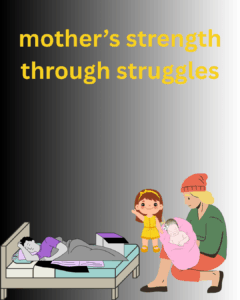
There are moments in life when everything you once believed about yourself — your strength, your limits, your patience — gets tested beyond imagination. I never thought I’d discover my mother’s strength during those unbearable days.

 I never thought I’d live through days where even breathing felt heavy, where tears became my silent language, and where hope seemed like a distant luxury. But I did. And today, as I write this, I realize that sometimes life breaks you only to show you how unbreakable you truly are.

https://www.facebook.com/groups/davidattenboroughfanss/posts/4166123566992119/

The Day Life Changed Forever

It all began when fate decided to turn my world upside down. My husband met with a terrible accident — a broken thigh bone that left him completely bedridden for months. At that very moment, I had a 10-day-old baby in my arms, a tiny, fragile soul who depended on me for everything.

My elder daughter, just six years old, was trying to understand why everything around her suddenly felt so uncertain. She needed love, stability, and a mother who could hold her emotionally — but I was struggling just to stay awake and alive.

The Weight of Everything at Once

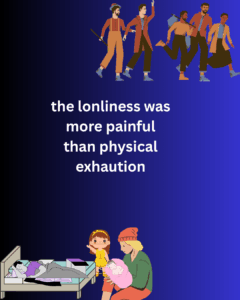
There was no one — no relative, no helping hand, no friend to check in and ask, “Are you okay?”
I had always been there for others during their dark times. I stood beside people when they needed someone. But when it was my turn, there was no one. That loneliness was more painful than any physical exhaustion.

I worked 24 hours a day — not because I wanted to, but because I had to. My clinic was the only source of income for the family. So, while my husband lay recovering and the baby needed feeding every few hours, I found myself switching between being a mother, a doctor, a wife, a teacher, a cook, a cleaner, and sometimes, just a broken soul trying to survive one more day.

Sleepless Nights and Endless Days

Every night was the same: feed the baby, check on my husband’s pain, make sure my elder daughter was sleeping peacefully, and then get ready for another long day ahead. There were moments I would sit in the corner of the clinic after everyone slept and just cry — quietly, endlessly. The silence of the night knew my pain better than anyone else.

The days blurred into each other. There was no rest, no break, no one to share even a cup of tea with. I learned to hide my pain behind a tired smile because that’s what mothers do. We smile through storms, we nurture through pain, and we keep walking — even when our feet bleed.

A Mother’s Promise

I promised myself one thing: “No matter how hard it gets, my children will never feel the emptiness I feel.”
So, I pushed myself harder. I taught my daughter her homework after midnight when I returned from work. I cooked for my family even when my hands trembled with fatigue. I smiled at patients at the clinic, gave them comfort, while I was breaking inside. But every single time I looked at my baby’s face or saw my elder daughter hugging me tight, something divine whispered inside me, “Keep going… you are doing it.”

The Invisible Battle

People see strength in others and think it’s natural. But strength is born out of suffering. My mind was constantly fighting fear — what if something happens to my husband? What if I fall sick? What if I fail to provide for my children? These thoughts haunted me every night.

But somehow, I still woke up every morning, wore my courage like armor, and showed up again. Because life doesn’t pause for your pain. It continues to demand more from you, and you either break down or rise up. I chose to rise — even when I was broken.

The Healing Phase

Time healed my husband’s leg, but it also healed parts of me I didn’t know existed. The woman who once cried helplessly became the woman who could handle anything. I started to find strength in my silence, purpose in my pain, and courage in my struggles.

There was no magic, no savior. Just me — standing tall against the storm. Every wound became a lesson, every tear a silent prayer, and every challenge a chapter of growth.

What I Learned from Those Dark Days

  1. You are stronger than you think.
    We never realize our power until life leaves us with no choice but to fight.

  2. Don’t expect others to understand your pain.
    Some journeys are meant to be walked alone — not as punishment, but as transformation.

  3. Faith is the only thing that keeps you breathing.
    When everything crumbles, hold on to faith — in God, in the universe, and in yourself.

  4. Motherhood is not just love; it’s endurance.
    It’s waking up tired but still smiling, giving even when you’re empty, and believing even when you’re breaking.

  5. Your scars tell your story.
    Don’t hide them. They’re proof that you fought, survived, and rebuilt yourself.

Looking Back with Gratitude

Today, when I look back, I don’t cry anymore. I smile — not because it was easy, but because I made it through. I built my family back, brick by brick, with love, tears, and unshakable determination. My daughters saw a mother who never gave up, and that’s the legacy I wanted to leave behind — not perfection, but perseverance.

I’ve learned that sometimes, God doesn’t send help because He wants you to discover the warrior within you. Every trial, every sleepless night, every heartbreak was shaping me into the woman I am today — a woman who no longer fears storms, because she has already survived the worst one.

Conclusion

Life may lead you to places you never thought you’d go. It may test your strength until you think you have nothing left to give. But in those moments, remember — the darkest nights often create the brightest souls.

If you are reading this and fighting your own battle, know this: You are not alone. You are not weak. You are just in the making of your strongest self.

Hold on. One day, you’ll look back and thank yourself for not giving up — just like I did.