
28.The Power of Having Someone Who Makes You Laugh During Motherhood

The Power of Having Someone Who Makes You Laugh

During Motherhood

https://mysticalmomworld.com/a-mothers-strength-journey-alone/ 

Motherhood is often painted as a journey of joy, love, and fulfillment — and it is. But between the diaper changes, sleepless nights, endless laundry, and emotional exhaustion, every mother reaches a point where she doesn’t just need help… she needs a human connection.

Not someone to hold the baby — but someone to hold her laughter for a moment. Someone to make her feel like herself again.

Because sometimes, all a mother needs is another soul who can laugh with her about the spilled milk, the messy bun, and the half-burnt chapati that became dinner.

The Unseen Weight of Motherhood

We often speak about the physical challenges of motherhood — the sleeplessness, the feeding routines, the body pain. But what’s rarely spoken about is the emotional isolation that follows.

A mother spends her days surrounded by love, yet feels alone in her emotions. She gives endlessly, but rarely receives the kind of emotional comfort she silently craves — a simple, lighthearted moment that reminds her she’s more than just a caregiver.

And that’s where the magic of a laughter companion comes in.

Why Every Mother Needs a Laughter Partner

It doesn’t have to be a best friend, sister, or even someone close. Sometimes it’s a neighbor who drops in with coffee, or an old friend who sends a meme saying, “This reminded me of you!”

That one conversation, that one giggle — it can change the entire tone of her day.

Because laughter heals what sleep cannot.
It resets her heart. It lifts the heaviness that no housework can wash away.

Motherhood can feel like living in a constant to-do list. But laughter brings her back to being human again — spontaneous, imperfect, joyful.
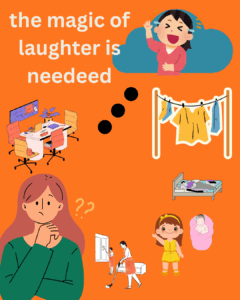
Emotional Companionship vs Physical Help
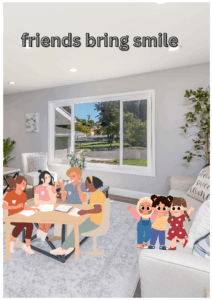
There’s a huge difference between someone who helps and someone who understands.

You can have a house full of people helping — but still feel emotionally empty.
You can have all chores done — yet feel something missing deep inside.

A laughter companion doesn’t come with solutions. They come with lightness. They remind you of the side of you that existed before you became “Mom.”

That moment when you laugh without guilt, even for a few seconds — that’s when motherhood feels lighter, and you feel seen.

The Science Behind Laughter and Stress Reliefhttps://www.universityhealth.com/blog/laughter#:~:text=Laughter%20Releases%20Endorphins%20and%20Boosts,and%20motivation%20while%20decreasing%20depression.

It’s not just emotional — it’s biological.
When you laugh, your body releases endorphins — natural chemicals that reduce stress, improve mood, and promote a sense of well-being.

Studies show that mothers who share social laughter regularly are less likely to face postpartum depression or anxiety. It balances hormonal stress responses and builds emotional resilience.

So yes — that friend who cracks silly jokes about sleepless nights or the chaos of motherhood? She’s not just funny — she’s a healer in disguise.

When Laughter Feels Lost

Many mothers confess that after childbirth, they forgot how to laugh freely.
The pressure to “do it all right,” to be perfect, to stay calm — steals away their natural humor.

If you’ve felt that — know this: you’re not alone.

You deserve moments that are just for you.
Moments where you laugh not because everything’s okay, but because it’s okay to laugh even when everything isn’t.
How to Find Your Laughter Companion

  1. Reconnect with old friends – Message that friend who once made you laugh till you cried. Chances are, she misses you too.

  2. Join mom communities – There are local and online groups where mothers share stories, jokes, and support each other emotionally.

  3. Be open to new bonds – Sometimes, your laughter companion can come from unexpected places — a coworker, a neighbor, even a stranger who becomes a friend.

  4. Start the conversation – Don’t wait for someone to reach out. Share your stories, your silly moments — laughter grows when it’s shared.

Motherhood Isn’t Meant to Be Silent

There’s an invisible expectation that mothers should always be strong, calm, and serious.
But laughter doesn’t make you less strong — it makes your strength shine brighter.

When you laugh, your kids see happiness as a part of life’s rhythm. They learn that strength isn’t silence — it’s joy in motion.

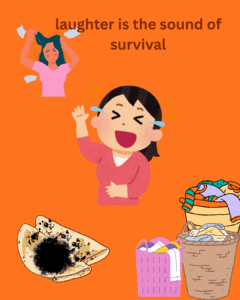
So, laugh loudly. Laugh at your messy hair, your burnt rotis, your never-ending laundry pile. Let your laughter echo through the walls of your motherhood — it’s your song of survival.
A Real-Life Moment

I still remember one day when my friend came over unannounced. My house looked like a storm had hit it, my baby was crying, and I was in my pajamas. I expected her to judge, but instead, she just looked around and said, “Welcome to the club, you’re officially a mom!”

We laughed — a long, uncontrollable, healing laugh.

And in that laughter, I found my lost self again. That moment reminded me that even chaos has its charm when shared with the right person.

The Lightness of Shared Souls

At the end of the day, motherhood is not just about raising children — it’s about raising yourself into a more patient, loving, and resilient version of you.

And to do that, you need moments of release, of silliness, of warmth.
You need someone — anyone — who can remind you that you still have a life beyond motherhood.

That person doesn’t have to fix you. They just have to sit beside you, maybe with a cup of tea, and laugh about something that makes no sense — but makes your heart lighter.

Because motherhood isn’t meant to be survived in silence.
It’s meant to be lived — with laughter, love, and light-hearted companionship.

Conclusion: Laughter — A Mother’s Silent Medicine

If you’re reading this and nodding, it’s your sign — call that friend. Send that message. Step out for that chai.

You don’t need a helper; you need a laugh partner.
Someone who fills your air with giggles when your mind feels heavy.

Because motherhood may be a serious responsibility — but it deserves moments of beautiful, silly laughter too.
And in that laughter, a mother rediscovers herself.

19.Why Patience Is the Strongest Parenting Skill

https://mysticalmomworld.com/when-everything-feels-messed-up-mothers-sy/Why Patience Is the Strongest Parenting Skill

 Introduction: The Unspoken Power of a Patient Parent


There are moments in parenting when silence speaks louder than shouting, and waiting brings more results than rushing.
Patience — that one word that sounds simple, but feels impossible when your child is crying endlessly, refusing food, or testing every ounce of your calm.

But here’s the truth: patience is not just another parenting skill; it’s the strongest, deepest, and most transformative one. It’s the invisible thread that connects love, discipline, understanding, and growth.

When parents learn to pause before reacting, breathe before speaking, and listen before judging — something magical happens. The home becomes peaceful, the child feels safe, and parenting becomes less about control and more about connection.

 The Modern Parenting Storm

Today’s parents live in a whirlwind — deadlines, social comparisons, and the endless pressure to “do it all.” We scroll through social media and see perfect pictures: smiling kids, tidy homes, and mothers who look serene while baking cookies.

But real life? It’s far from perfect.

A spilled cup of milk just after cleaning.
A tantrum in a crowded supermarket.
Homework battles that feel like mini wars.

And amid this chaos, the easiest thing to lose is patience — that invisible calm that makes love understandable.

But the real magic lies not in perfection — it lies in the parent who chooses to stay kind even when it’s hard.

What Patience Really Means in Parenting

Patience in parenting doesn’t mean letting your child do whatever they want. It means:

  • Allowing your child to make mistakes without jumping to correct them.

  • Listening even when you disagree.

  • Staying calm while teaching the same thing for the 100th time.

  • Understanding that growth is a slow, beautiful process — not a competition.

Children don’t grow faster because we yell. They grow deeper because we guide them gently.

Patience teaches emotional safety.
It tells a child, “You can make mistakes and still be loved.”
That message alone can build a confident, emotionally secure adult.

 Real-Life Reflection: When Patience Became My Teacher

I still remember the day my son refused to get ready for school. He sat on the floor crying because he couldn’t find his favorite socks. I was already late for work, my heart racing with frustration.

I almost shouted — almost.

But then, I took a deep breath. I knelt down, looked into his teary eyes, and said softly, “It’s okay. Let’s find another pair together.”

He stopped crying. We found a new pair. He hugged me tight before leaving.

That day, I realized — patience doesn’t delay things, it heals them.
It builds bridges between our hearts and our children’s hearts — quietly, beautifully.

The Science Behind Patience and Child Development

Psychologists have long confirmed what mothers intuitively know: a calm parent raises a calm child.

When parents respond patiently, a child’s brain feels secure and learns to regulate emotions better. They become less reactive, more empathetic, and emotionally intelligent.

Every time a parent chooses patience, they’re teaching their child:

  • Self-control

  • Problem-solving

  • Respect for others’ emotions

  • Emotional resilience

In contrast, impatience — yelling, frustration, or emotional withdrawal — triggers fear or defensiveness in children. Over time, this erodes trust.

So yes, patience isn’t weakness — it’s quiet strength. It’s emotional wisdom that says, “I’ll wait because I love you enough to trust your journey.”

The Ripple Effect of Patience in Family Life

When patience becomes the foundation of your parenting, the entire atmosphere of the home changes.

  • Conversations replace confrontations.

  • Understanding replaces punishment.

  • Connection replaces correction.

Children begin to mirror the energy they receive. A patient home becomes a safe home.

Imagine a world where every child feels heard, where parents respond, not react. That world starts with one parent choosing patience today.

How to Practice Patience in Everyday Parenting

Patience is not a gift you’re born with — it’s a muscle you strengthen daily. Here are a few ways to cultivate it:

1. Pause Before You React

When emotions rise, take a breath. That tiny pause changes everything. It gives your logical brain a chance to lead, not your anger.

2. See the World Through Their Eyes

Children aren’t being “difficult”; they’re learning life. Sometimes a tantrum is a cry for attention, not defiance.

3. Let Go of Control

Your child is not a project; they’re a person. Allow space for mistakes — theirs and yours.

4. Model Calmness

Children learn more from what they see than what they hear. Your calmness becomes their calmness.

5. Practice Self-Compassion

Patience starts with how you treat yourself. A peaceful parent is not a perfect one — it’s a forgiving one.

When Patience Feels Hard — Remember This

Every parent loses patience sometimes. You’re human. You’re allowed to feel exhausted, unseen, or emotionally drained.

But each time you try again, you’re teaching your child that love isn’t about perfection — it’s about effort.

A patient parent is not someone who never gets angry, but someone who chooses love even when anger knocks at the door.

That’s what makes patience the strongest parenting skill. It’s love wearing the clothes of endurance.

Closing Thoughts: The Gift You Give When You Wait

Patience is not just something you give your child — it’s something you give your future.

Every time you hold your words, slow down, and listen — you’re planting seeds of empathy, trust, and understanding that will bloom years later.

One day, your grown-up child will remember not the times you yelled, but the times you waited — for them to find words, to calm down, to grow.

That’s the power of patience.
It doesn’t just raise good children — it raises peaceful hearts.