83. When Emotions Burst Out: Understanding Why We Lose Control Sometimes

When Emotions Burst Out: Understanding Why We Lose Control Sometimes
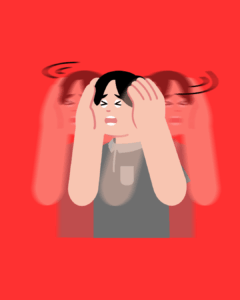
There are days when the smallest thing can break us. One moment we are holding everything together, and the next moment our emotions burst out like a dam giving way after years of pressure. Many people feel ashamed when they lose control over their emotions, but the truth is simple: it happens to everyone, especially to the ones who carry too much silently.

Yesterday was one of those days for me. I felt something inside me snap — not in a dramatic way, but in a very human way. My eyes filled up, my chest tightened, and I couldn’t hold it anymore. I let go. I burst out. And the first question that came to my mind was: Why? Why did I lose control? What exactly triggered me?

Sometimes the reasons are not one single thing. Sometimes it is a whole collection of unspoken emotions, unexpressed exhaustion, hormonal fluctuations, expectations, responsibilities, relationships, and even natural cycles like the new moon energy. When all of these layers pile up, it is only natural for a person to feel overwhelmed.

Let’s break down what might actually cause such emotional outbursts and how completely normal it is to experience them.

1. PMS and Emotional Sensitivity

For many women, PMS (Premenstrual Syndrome) is not just a physical experience. It affects emotions, thoughts, reactions, and sensitivity levels.
Hormonal changes can cause:

  • sudden sadness

  • irritability

  • emotional flooding

  • feeling unappreciated

  • feeling disconnected

  • unexplained anger or tears

During PMS, the emotional tolerance tank becomes very small. Something that feels manageable on any other day might feel like a storm during this time. Losing control over emotions is a very real and very common PMS symptom.

And no — it doesn’t mean you’re overreacting. It means your body is going through a chemical shift that impacts your emotional strength.

2. Tired Schedules and Emotional Burnout

Sometimes, the reason we break down has nothing to do with hormones. It has everything to do with exhaustion.

We carry so many roles — parent, partner, daughter-in-law, professional, caretaker, homemaker, emotional support system for everyone around us. When life becomes a tight schedule with no pause, no space, and no time to breathe, emotional burnout becomes inevitable.

You might think you’re strong enough to handle it all, but your body knows better. Your emotions know better. When the body and mind reach their limit, they release the emotions you’ve been suppressing.

Because tears are not a weakness.
They are an overflow.

Burnout is real, and emotional outbursts are often a sign that you have been running on empty for too long.

3. Emotional Stress from Relationships and Joint Family Dynamics

Joint families are beautiful — but they also come with responsibilities, expectations, opinions, and emotional pressures.

Sometimes you feel judged.
Sometimes you feel misunderstood.
Sometimes you feel invisible.
Sometimes you feel too seen.

There is always something happening around you, and you rarely get a quiet emotional space to understand your own feelings. When you constantly adjust, compromise, smile, and stay strong in front of everyone, the emotional load silently keeps increasing.

Small moments that normally wouldn’t bother you can feel huge when you’re already carrying old hurt, unresolved stress, or unspoken pain. Emotional outbursts in such situations are not unusual; they are a sign of emotional overload.

4. The New Moon’s Emotional Effect

Many people notice that their emotions peak during the new moon. Though science is still exploring the connection, countless individuals report feeling:

  • unusually emotional

  • introspective

  • drained

  • mentally sensitive

  • anxious or overwhelmed

The new moon often brings inner emotional cleansing. It is a period where hidden thoughts and suppressed feelings rise to the surface. So yes, if you felt unusually emotional, the new moon phase might have contributed to your outburst.

Sometimes nature works with us and sometimes against us. And that’s okay.

5. When Everything Comes Together at Once

Most emotional outbursts don’t come from one problem.
They come from many things piling up silently.

Imagine holding ten bags at once.
Each bag alone is manageable.
But when all ten stack together, anyone would collapse.

Your emotional outburst might have happened because:

  • PMS lowered your emotional threshold

  • A tired schedule made you mentally exhausted

  • Joint family dynamics added emotional weight

  • Relationship stress increased your sensitivity

  • New moon energy intensified your emotions

When so many layers combine, losing control isn’t surprising — it’s normal.

6. You Are Not Weak. You Are Human.

The world teaches us how to be strong, but it never teaches us how to break.
But breaking is a part of being human.

Your emotional outburst was not a failure.
It was not a sign of weakness.
It was not something to feel guilty about.

It was your mind’s way of saying:
“You’ve been holding too much. Let me help you release some of it.”

Emotions need expression. Tears are cleansing.
If you burst out, it means your system trusted you enough to let everything out.

7. What You Can Do After an Emotional Breakdown

1. Acknowledge it without guilt

Say to yourself: I had a moment. That’s okay.

2. Identify what triggered you

Not to blame yourself, but to understand your emotional patterns.

3. Rest

Your body and mind need recovery after emotional overflow.

4. Reduce your load

Even small changes can help — say no when needed, ask for help, take breaks.

5. Talk to someone safe

Sharing feelings lightens emotional pressure.

6. Ground yourself

A walk, a bath, meditation, journaling — anything that brings you back to yourself.

Final Thought: It’s Okay to Feel Too Much

Losing control over emotions does not make you unstable.
It makes you emotionally alive.

Whether it was PMS, exhaustion, emotional stress, joint family issues, or the new moon — what matters is that you survived the moment, and today you’re reflecting on it with clarity.

Be gentle with yourself.
Your emotions are valid.
Your journey is real.
And you’re doing better than you think.
https://mysticalmomworld.com/when-life-takes-unexpected-turns-staying-strong-when-everything-feels-uncertain/

64.When Exhaustion Takes Over: How Motherhood Changed My Sleep, My Energy, and My Entire Life

When Exhaustion Takes Over: How Motherhood Changed My Sleep, My Energy, and My Entire Life

Motherhood changes everything, but some changes arrive silently—slowly building up until one day they take over our entire life. For years, I lived with very little sleep. I hardly slept properly from my childhood till I reached the age of 30. I was used to surviving on broken sleep, late nights, and restless days. I never imagined sleep could become such a huge part of my identity. I never knew that lack of sleep could catch up one day like a storm.

Everything changed after the birth of my second child. Suddenly, exhaustion was not just tiredness—it became a constant companion. It became a physical weight, an emotional burden, and a mental confusion I didn’t understand.

I slowly started realizing that motherhood exhaustion is not just about being tired. It is about feeling mentally foggy, emotionally drained, physically weak, and completely disconnected from the world around me. It is a state where I can hardly stay awake for even an hour. If I force myself to stay awake, the entire day becomes unexpectedly worst. Nothing goes right. I feel irritated, lost, and not in my senses.

And the hardest part? This exhaustion affects my children too. I am not able to respond calmly. I get disturbed very quickly. I feel guilty, helpless, and overwhelmed.

This blog post is for every mother who feels the same. This is for every mother who wakes up tired, who sleeps tired, and who spends every moment balancing responsibilities with a half-broken body and half-functioning mind.

Why This Exhaustion Feels Different After the Second Child

https://mysticalmomworld.com/when-you-start-parenting-your-own-parents-the-emotional-shift-no-one-talks-about/

People often say, “You already have one child. So the second one should be easier.” But the truth is the second child adds a different kind of weight—a weight you were not prepared for.

With the first child, even if life was tiring, everything was new. There was curiosity, excitement, and attention from everyone around. But with the second child, responsibilities double while rest reduces even more.

My body changed.
My mind changed.
My emotional energy changed.

Suddenly, the sleep deprivation I was used to from childhood started affecting me differently. It felt like my body finally said, “Enough.”

Now, even staying awake for an hour feels like a battle. My eyes burn, my mind shuts down, and my body refuses to cooperate.

And when a mother’s body collapses, the entire household feels the ripple.

The Guilt of Not Being Able to Function as a Mother

The most painful part of this exhaustion is the guilt.

I want to be calm.
I want to be patient.
I want to be emotionally available for my kids.

But exhaustion steals that part of me.

When I can’t respond calmly, I feel like I am failing my children.
When I am disturbed, I feel like I am losing control.
When I am not in my senses, I feel like I am not the mother I want to be.

Motherhood already has a huge emotional load. When combined with sleep deprivation and physical weakness, the pressure becomes unbearable. But the truth is: this does not make me a bad mother—it makes me a human mother.

Exhaustion is not a choice.
Fatigue is not a weakness.
Burnout is not a failure.

It is the body’s natural response to years of physical strain, emotional stress, sleepless nights, and endless giving.

Why The Body Crashes After Years of Sleeplessness

For years, I survived without proper rest. But the body has limits. Sleep is not a luxury—sleep is healing. When the body goes through years of lack of sleep, stress, childbirth, breastfeeding, hormonal changes, and mental overload, it eventually collapses.

This is what happened to me.

After my second child:

  • My hormones shifted drastically

  • My energy levels dropped

  • My mental clarity reduced

  • My body stopped tolerating lack of sleep

  • My nerves became more sensitive

So now, even a small disturbance throws my entire day off balance.

This is not laziness.
This is not mental weakness.
This is a biological and emotional reaction to years of overworking, overstressing, and over giving.

Balancing Motherhood When Your Body No Longer Listens

The hardest part of this new phase is learning how to manage everything when my body simply refuses to stay awake or stay stable.

There are days when I have so much work to do, but I cannot do anything because my body shuts down.
There are moments when I want to play with my kids, but my eyes can’t stay open.
There are times when I want to respond lovingly, but my energy levels are too low to even speak.

Balancing motherhood with exhaustion is extremely difficult.

But slowly, I am trying to make small changes.

1. Listening to My Body Instead of Fighting It

If I am exhausted, I rest. Even if it is 20 minutes. Even if the house is messy.

2. Taking Micro-Breaks Throughout the Day

A 5-minute quiet moment can prevent a full-day breakdown.

3. Lowering My Expectations

I don’t need to be a perfect mother. I just need to be present.

4. Asking for Help Without Guilt

Even a strong mother needs support.

5. Allowing Myself Emotional Space

It’s okay to cry. It’s okay to feel tired. It’s okay to slow down.

Motherhood Exhaustion Needs Recognition, Not Judgement

Many people don’t understand this phase. They think mothers should “adjust,” “manage,” or “stay strong.”

But exhaustion is real.
Fatigue is real.
Burnout is real.

No mother should feel judged for feeling drained.
No mother should feel guilty for feeling tired.
No mother should feel weak for needing rest.

This phase doesn’t define us.
It doesn’t make us less capable.
It doesn’t make us less loving.

It simply makes us real.

I Am Learning to Heal — Slowly, Gently, Patiently

Today, I am still exhausted. I still struggle to stay awake. I still get disturbed easily. I still feel out of balance.

But I am learning to heal.

I am learning to understand my body.
I am learning to accept my limits.
I am learning to prioritise rest over perfection.
I am learning to rebuild myself, one day at a time.

Motherhood may drain us, but it also gives us strength we never knew we had.

And healing begins when we stop pretending to be unbreakable.

https://mysticalmomworld.com/how-to-start-a-new-business-successfully/

38.Embracing Motherhood Alone: My Journey of Raising Kids Single-Handedly While My Husband Works Away

https://mysticalmomworld.com/why-patience-is-the-strongest-parenting-skill/Embracing Motherhood Alone: My Journey of Raising Kids Single-Handedly While My Husband Works Away

Life doesn’t always move according to our comfort. Sometimes, it throws us into roles we never imagined we could handle so gracefully. For me, that role is being a mother who takes care of both her kids single-handedly, while my husband lives away from us for work.

What started as a phase of fear and exhaustion has slowly become a journey of strength, love, and unimaginable emotional growth. It’s not an easy life, but it’s our life, and I have learned to embrace it with every heartbeat.

The Quiet Evenings and Louder Responsibilities

When my husband first left for work to another city, I remember the sudden silence that filled the house after dinner. That silence used to remind me of how incomplete the home felt. The kids would ask, “When will Papa come?” and I would give them a smile hiding the lump in my throat.

From managing school schedules, meals, homework, and emotional needs — to being the only adult to handle sickness, tantrums, and bedtime stories — every day felt like a test of patience and power. But over time, I realized that motherhood has its own rhythm. The chaos turns into comfort when you learn to see love behind every responsibility.

Becoming the Anchor of My Home

There’s a certain kind of strength that comes from knowing that your children rely solely on you for everything — from tying their shoes to calming their fears at night. That strength is not born overnight. It grows with each tear you wipe, each late-night fever you nurse, and each time you choose to stay calm when your heart is tired.

I have learned that I am not just a caretaker — I am the anchor that keeps this little family grounded. Even when the waves of loneliness or fatigue hit hard, I remind myself that I’m doing something that truly matters.

Every morning, when I see their innocent smiles, I feel the courage to face another day — alone, but strong.

The Hidden Beauty of Single-Handed Motherhood

People often pity mothers who raise kids alone, but I wish they could see the beauty hidden in these moments. When I watch my kids share food, help each other with homework, or surprise me with a handmade card that says “We love you, Amma,” my heart overflows.

There is no greater reward than seeing the values you’ve planted grow inside your children. I’ve realized that being both the nurturer and the disciplinarian has given me a balanced bond with my kids — one filled with honesty, love, and respect.

Yes, there are days when I cry silently at night, missing my husband’s presence, missing the comfort of being two. But there are also days when I look at my children and feel an unshakable pride — that I am giving them everything they need, even in his absence.

Missing My Partner Yet Growing Stronger

Distance teaches you love differently. My husband and I may not share every meal or bedtime conversation, but we share the purpose of building a strong family. His absence makes me stronger. His efforts remind me that this phase of distance is just another form of love and sacrifice for our future.

We talk late into the night sometimes — about the kids, about how the house feels emptier without him, about how much he misses the sound of their laughter. These conversations keep us emotionally connected even when miles apart.

I’ve learned that love isn’t just about presence — it’s about understanding and endurance.

My Emotional Growth as a Mother

Handling everything alone has changed me. I’ve become more patient, more practical, and surprisingly more grateful. Every small achievement feels big now — when both kids eat well, when I finish the day’s chores without breaking down, when the house is filled with laughter despite exhaustion.

Motherhood has shown me that strength is not about doing everything perfectly. It’s about showing up every single day, even when you don’t feel like it. It’s about loving your children unconditionally, even when you’re running on empty.

This journey taught me to value myself as a woman too. Amid all the responsibilities, I’ve started taking little moments to read, to breathe, to look in the mirror and remind myself that I am doing enough — that I am enough.

The Joy of Togetherness Even in Distance

Though my husband is far, our hearts are connected in every small detail. The kids send him drawings, I share their stories, and during video calls, our family feels complete again. We’ve found joy in our own way — through love that travels across time zones and miles.

I’ve realized that family is not defined by physical presence but by emotional connection. Our children are growing up learning that love can stay strong even when people are apart — a lesson that will stay with them for life.

A Mother’s Silent Gratitude

Every night, after putting the kids to bed, I sit by the window, sometimes in silence, sometimes with tears, and often with gratitude. Gratitude that I get to be a mother. Gratitude that I have two beautiful souls calling me “Amma.” Gratitude that even in this phase of separation, love has found a way to hold us together.

Raising kids alone has made me see motherhood not as a duty, but as a divine blessing — a journey of discovering the power within myself. I may get tired, I may break sometimes, but I rise again because love keeps me moving.

Conclusion: My Heart’s Message

To every mother who is managing life single-handedly while her partner is away — you are not alone. You are seen, you are strong, and you are doing an incredible job. Don’t measure your worth by how perfect things look, but by how much love you pour into every day.

This journey has taught me that being a mother is not just about raising children — it’s about raising yourself into the strongest, most loving version of who you are meant to be.

28.The Power of Having Someone Who Makes You Laugh During Motherhood

The Power of Having Someone Who Makes You Laugh

During Motherhood

https://mysticalmomworld.com/a-mothers-strength-journey-alone/ 

Motherhood is often painted as a journey of joy, love, and fulfillment — and it is. But between the diaper changes, sleepless nights, endless laundry, and emotional exhaustion, every mother reaches a point where she doesn’t just need help… she needs a human connection.

Not someone to hold the baby — but someone to hold her laughter for a moment. Someone to make her feel like herself again.

Because sometimes, all a mother needs is another soul who can laugh with her about the spilled milk, the messy bun, and the half-burnt chapati that became dinner.

The Unseen Weight of Motherhood

We often speak about the physical challenges of motherhood — the sleeplessness, the feeding routines, the body pain. But what’s rarely spoken about is the emotional isolation that follows.

A mother spends her days surrounded by love, yet feels alone in her emotions. She gives endlessly, but rarely receives the kind of emotional comfort she silently craves — a simple, lighthearted moment that reminds her she’s more than just a caregiver.

And that’s where the magic of a laughter companion comes in.

Why Every Mother Needs a Laughter Partner

It doesn’t have to be a best friend, sister, or even someone close. Sometimes it’s a neighbor who drops in with coffee, or an old friend who sends a meme saying, “This reminded me of you!”

That one conversation, that one giggle — it can change the entire tone of her day.

Because laughter heals what sleep cannot.
It resets her heart. It lifts the heaviness that no housework can wash away.

Motherhood can feel like living in a constant to-do list. But laughter brings her back to being human again — spontaneous, imperfect, joyful.

Emotional Companionship vs Physical Help

There’s a huge difference between someone who helps and someone who understands.

You can have a house full of people helping — but still feel emotionally empty.
You can have all chores done — yet feel something missing deep inside.

A laughter companion doesn’t come with solutions. They come with lightness. They remind you of the side of you that existed before you became “Mom.”

That moment when you laugh without guilt, even for a few seconds — that’s when motherhood feels lighter, and you feel seen.

The Science Behind Laughter and Stress Reliefhttps://www.universityhealth.com/blog/laughter#:~:text=Laughter%20Releases%20Endorphins%20and%20Boosts,and%20motivation%20while%20decreasing%20depression.

It’s not just emotional — it’s biological.
When you laugh, your body releases endorphins — natural chemicals that reduce stress, improve mood, and promote a sense of well-being.

Studies show that mothers who share social laughter regularly are less likely to face postpartum depression or anxiety. It balances hormonal stress responses and builds emotional resilience.

So yes — that friend who cracks silly jokes about sleepless nights or the chaos of motherhood? She’s not just funny — she’s a healer in disguise.

When Laughter Feels Lost

Many mothers confess that after childbirth, they forgot how to laugh freely.
The pressure to “do it all right,” to be perfect, to stay calm — steals away their natural humor.

If you’ve felt that — know this: you’re not alone.

You deserve moments that are just for you.
Moments where you laugh not because everything’s okay, but because it’s okay to laugh even when everything isn’t.

How to Find Your Laughter Companion

  1. Reconnect with old friends – Message that friend who once made you laugh till you cried. Chances are, she misses you too.

  2. Join mom communities – There are local and online groups where mothers share stories, jokes, and support each other emotionally.

  3. Be open to new bonds – Sometimes, your laughter companion can come from unexpected places — a coworker, a neighbor, even a stranger who becomes a friend.

  4. Start the conversation – Don’t wait for someone to reach out. Share your stories, your silly moments — laughter grows when it’s shared.

Motherhood Isn’t Meant to Be Silent

There’s an invisible expectation that mothers should always be strong, calm, and serious.
But laughter doesn’t make you less strong — it makes your strength shine brighter.

When you laugh, your kids see happiness as a part of life’s rhythm. They learn that strength isn’t silence — it’s joy in motion.

So, laugh loudly. Laugh at your messy hair, your burnt rotis, your never-ending laundry pile. Let your laughter echo through the walls of your motherhood — it’s your song of survival.

A Real-Life Moment

I still remember one day when my friend came over unannounced. My house looked like a storm had hit it, my baby was crying, and I was in my pajamas. I expected her to judge, but instead, she just looked around and said, “Welcome to the club, you’re officially a mom!”

We laughed — a long, uncontrollable, healing laugh.

And in that laughter, I found my lost self again. That moment reminded me that even chaos has its charm when shared with the right person.

The Lightness of Shared Souls

At the end of the day, motherhood is not just about raising children — it’s about raising yourself into a more patient, loving, and resilient version of you.

And to do that, you need moments of release, of silliness, of warmth.
You need someone — anyone — who can remind you that you still have a life beyond motherhood.

That person doesn’t have to fix you. They just have to sit beside you, maybe with a cup of tea, and laugh about something that makes no sense — but makes your heart lighter.

Because motherhood isn’t meant to be survived in silence.
It’s meant to be lived — with laughter, love, and light-hearted companionship.

Conclusion: Laughter — A Mother’s Silent Medicine

If you’re reading this and nodding, it’s your sign — call that friend. Send that message. Step out for that chai.

You don’t need a helper; you need a laugh partner.
Someone who fills your air with giggles when your mind feels heavy.

Because motherhood may be a serious responsibility — but it deserves moments of beautiful, silly laughter too.
And in that laughter, a mother rediscovers herself.