78. Life Feels Heavier Till We Realize What We Have: The Art of Appreciating What You Have in Life

Life Feels Heavier Till We Realize What We Have: The Art of Appreciating What You Have in Life
There comes a moment in life when everything feels unbearably heavy. No matter how much we try to stay positive, our mind keeps drifting toward what we lack—a dream we haven’t achieved yet, a person who walked away, an opportunity we missed, or a life we wish we had. But at some point, something shifts. We pause, look around, and finally recognize that what we already have is far more precious than what we keep chasing.

This is the point where life begins to feel lighter.
This is the point where we stop cringing for things and people who never belonged to us in the first place.
This is the point where gratitude quietly enters and transforms everything.

In this blog, let’s explore why life feels heavy, how we fall into the trap of wanting more, and how appreciating what you have in life can bring inner peace that nothing else can.

Why Does Life Feel So Heavy?

Life becomes heavy not because of responsibilities or challenges, but because of the mental load of expectations we place on ourselves. We expect life to unfold in a particular way. We expect people to behave in a way that satisfies our emotional needs. We expect our plans to succeed without obstacles.

But life doesn’t work like that.

The weight comes from:

  • Wanting things that aren’t meant for us

  • Holding onto people who were only temporary

  • Comparing our life to what others show

  • Believing happiness lies somewhere in the future

  • Ignoring the blessings we already live with

Life doesn’t become hard because it’s unfair. It becomes hard because we resist accepting what is and keep idealizing what should be.

We Cringe Over What We Lost, Not What We Have

One of the biggest truths about human nature is that we value what leaves us more than what stays.
We notice absence louder than presence.
We feel loss stronger than blessings.

But here’s a gentle reality check:

The things or people who didn’t stay were never meant to stay.
The paths that didn’t open were not meant for us.
The opportunities that didn’t progress were not aligned with our purpose.

Yet, we hold onto these disappointments so tightly that we ignore the things that are going right—our health, our shelter, our loved ones, our growth, our talents, our small joys.

The heaviness comes from choosing to stare only at the door that closed, forgetting the thousands of windows still open.

This is why appreciating what you have in life is not just a positive habit—it is emotional freedom.

The Turning Point: Realizing What We Already Have

The turning point comes quietly. Sometimes after heartbreak, sometimes after failure, sometimes during a long walk, sometimes during a lonely night.
Suddenly, we become aware that:

  • We have more blessings than troubles

  • We have more support than loneliness

  • We have more strength than we give ourselves credit for

  • We have more abundance than we acknowledge

This realization changes everything.

You no longer chase people to stay.
You no longer beg for attention or validation.
You no longer compare your life with someone else’s highlight reel.
You no longer punish yourself for not having more.

Instead, you develop gratitude for the simple things:

The comfortable bed you sleep in.
The food on your plate.
The one friend who truly cares.
The parents who love you.
The roof that shelters you.
The body that carries you through life.
The job that pays your bills.
The opportunities that helped you grow.
The wisdom you gained through struggles.

We often overlook these simple things because they feel ordinary.
But the truth is, the ordinary is what sustains us.
What we consider ‘normal’ is someone else’s miracle.

The Life-Changing Power of Gratitude

Gratitude is the strongest form of emotional healing.
It shifts your focus from missing pieces to the beautiful puzzle already forming.
It doesn’t mean your life becomes perfect—it means your perspective becomes peaceful.

Here’s what gratitude does:

1. It reduces emotional heaviness

When you appreciate what you have, the need to chase unnecessary things reduces. Life feels simpler.

2. It improves mental clarity

Your mind stops wandering into “what if” and starts living in “what is”.

3. It heals past trauma

By focusing on the present, the grip of old wounds loosens.

4. It attracts more good into your life

A grateful mindset naturally opens doors to better relationships, opportunities, and positivity.

5. It brings inner peace

Peace doesn’t come from achieving everything; it comes from being thankful for what is already yours.

Why You Should Stop Cringing for What Doesn’t Belong to You

Many times, the things or people we crave for are not aligned with our growth, energy, or destiny.
Life removes things we cling to only because it wants to replace them with something better.

Yet we resist.

We cry over closed doors instead of trusting the path ahead.
We try to hold on to temporary people.
We stretch ourselves to fit into spaces we’ve outgrown.
We chase love that drains us.
We run behind dreams that don’t fulfill us.

But remember this:

If it was truly yours, it would never require you to beg, force, or break yourself to keep it.

Letting go is not losing.
Letting go is making space for what belongs to you.

How to Start Appreciating What You Have in Life (Simple Practice)

Here are 5 simple steps you can start today:

1. List 5 blessings every morning

Even if it’s as basic as clean water or electricity—write it down.

2. Stop comparing

Your journey is meant for you alone.

3. Practice presence

Observe your daily life without judgement.

4. Acknowledge your growth

You’ve survived everything life threw at you so far. That’s strength.

5. Accept what isn’t yours

Release the emotional weight of anything that drains your energy.

Conclusion: Life Becomes Lighter With Gratitude

Life only feels heavy when we measure it by what we lack.
The moment we start appreciating what we have in life, the burden lifts.
We breathe easier, live softer, love deeper, and find joy in the ordinary.

You are already blessed.
You are already enough.
You are already richer than you think.

And once your heart understands this, life stops feeling heavy.
It becomes beautiful—exactly as it is.
https://mysticalmomworld.com/when-life-takes-unexpected-turns-staying-strong-when-everything-feels-uncertain/

64.When Exhaustion Takes Over: How Motherhood Changed My Sleep, My Energy, and My Entire Life

When Exhaustion Takes Over: How Motherhood Changed My Sleep, My Energy, and My Entire Life

Motherhood changes everything, but some changes arrive silently—slowly building up until one day they take over our entire life. For years, I lived with very little sleep. I hardly slept properly from my childhood till I reached the age of 30. I was used to surviving on broken sleep, late nights, and restless days. I never imagined sleep could become such a huge part of my identity. I never knew that lack of sleep could catch up one day like a storm.

Everything changed after the birth of my second child. Suddenly, exhaustion was not just tiredness—it became a constant companion. It became a physical weight, an emotional burden, and a mental confusion I didn’t understand.

I slowly started realizing that motherhood exhaustion is not just about being tired. It is about feeling mentally foggy, emotionally drained, physically weak, and completely disconnected from the world around me. It is a state where I can hardly stay awake for even an hour. If I force myself to stay awake, the entire day becomes unexpectedly worst. Nothing goes right. I feel irritated, lost, and not in my senses.

And the hardest part? This exhaustion affects my children too. I am not able to respond calmly. I get disturbed very quickly. I feel guilty, helpless, and overwhelmed.

This blog post is for every mother who feels the same. This is for every mother who wakes up tired, who sleeps tired, and who spends every moment balancing responsibilities with a half-broken body and half-functioning mind.

Why This Exhaustion Feels Different After the Second Child

https://mysticalmomworld.com/when-you-start-parenting-your-own-parents-the-emotional-shift-no-one-talks-about/

People often say, “You already have one child. So the second one should be easier.” But the truth is the second child adds a different kind of weight—a weight you were not prepared for.

With the first child, even if life was tiring, everything was new. There was curiosity, excitement, and attention from everyone around. But with the second child, responsibilities double while rest reduces even more.

My body changed.
My mind changed.
My emotional energy changed.

Suddenly, the sleep deprivation I was used to from childhood started affecting me differently. It felt like my body finally said, “Enough.”

Now, even staying awake for an hour feels like a battle. My eyes burn, my mind shuts down, and my body refuses to cooperate.

And when a mother’s body collapses, the entire household feels the ripple.

The Guilt of Not Being Able to Function as a Mother

The most painful part of this exhaustion is the guilt.

I want to be calm.
I want to be patient.
I want to be emotionally available for my kids.

But exhaustion steals that part of me.

When I can’t respond calmly, I feel like I am failing my children.
When I am disturbed, I feel like I am losing control.
When I am not in my senses, I feel like I am not the mother I want to be.

Motherhood already has a huge emotional load. When combined with sleep deprivation and physical weakness, the pressure becomes unbearable. But the truth is: this does not make me a bad mother—it makes me a human mother.

Exhaustion is not a choice.
Fatigue is not a weakness.
Burnout is not a failure.

It is the body’s natural response to years of physical strain, emotional stress, sleepless nights, and endless giving.

Why The Body Crashes After Years of Sleeplessness

For years, I survived without proper rest. But the body has limits. Sleep is not a luxury—sleep is healing. When the body goes through years of lack of sleep, stress, childbirth, breastfeeding, hormonal changes, and mental overload, it eventually collapses.

This is what happened to me.

After my second child:

  • My hormones shifted drastically

  • My energy levels dropped

  • My mental clarity reduced

  • My body stopped tolerating lack of sleep

  • My nerves became more sensitive

So now, even a small disturbance throws my entire day off balance.

This is not laziness.
This is not mental weakness.
This is a biological and emotional reaction to years of overworking, overstressing, and over giving.

Balancing Motherhood When Your Body No Longer Listens

The hardest part of this new phase is learning how to manage everything when my body simply refuses to stay awake or stay stable.

There are days when I have so much work to do, but I cannot do anything because my body shuts down.
There are moments when I want to play with my kids, but my eyes can’t stay open.
There are times when I want to respond lovingly, but my energy levels are too low to even speak.

Balancing motherhood with exhaustion is extremely difficult.

But slowly, I am trying to make small changes.

1. Listening to My Body Instead of Fighting It

If I am exhausted, I rest. Even if it is 20 minutes. Even if the house is messy.

2. Taking Micro-Breaks Throughout the Day

A 5-minute quiet moment can prevent a full-day breakdown.

3. Lowering My Expectations

I don’t need to be a perfect mother. I just need to be present.

4. Asking for Help Without Guilt

Even a strong mother needs support.

5. Allowing Myself Emotional Space

It’s okay to cry. It’s okay to feel tired. It’s okay to slow down.

Motherhood Exhaustion Needs Recognition, Not Judgement

Many people don’t understand this phase. They think mothers should “adjust,” “manage,” or “stay strong.”

But exhaustion is real.
Fatigue is real.
Burnout is real.

No mother should feel judged for feeling drained.
No mother should feel guilty for feeling tired.
No mother should feel weak for needing rest.

This phase doesn’t define us.
It doesn’t make us less capable.
It doesn’t make us less loving.

It simply makes us real.

I Am Learning to Heal — Slowly, Gently, Patiently

Today, I am still exhausted. I still struggle to stay awake. I still get disturbed easily. I still feel out of balance.

But I am learning to heal.

I am learning to understand my body.
I am learning to accept my limits.
I am learning to prioritise rest over perfection.
I am learning to rebuild myself, one day at a time.

Motherhood may drain us, but it also gives us strength we never knew we had.

And healing begins when we stop pretending to be unbreakable.

https://mysticalmomworld.com/how-to-start-a-new-business-successfully/

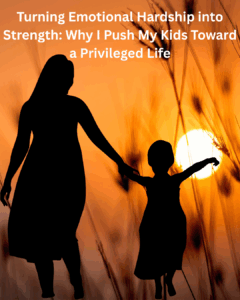
31.Life Made Me Hard, But My Kids Will Live Soft Yet Strong

https://mysticalmomworld.com/live-your-dreams-along-with-motherhood/Life Made Me Hard, But My Kids Will Live Soft Yet Strong

There comes a time in every mother’s life when pain turns into purpose.
When struggles that once broke her now become the fuel that drives her dreams — not for herself anymore, but for her children.

I am that mother.

Life didn’t treat me gently. It wasn’t the kind of life where mornings started with smiles and nights ended with peace. I have seen days when breathing itself felt like a burden — when responsibilities, pain, and loneliness walked hand in hand. Those were the days that made me emotionally hard. But instead of breaking me, life carved me into a woman with fire in her eyes and purpose in her heart.

I Don’t Want My Kids to Face What I Faced

My emotional toughness is not my pride — it’s my wound that healed the hard way. I don’t want my children to go through the same painful journey that shaped me. I want them to grow in an environment where strength doesn’t come from suffering, but from values, education, and discipline.

I want my children to study — not just because society demands it, but because I know what happens when opportunities slip away due to struggles and survival.
Even when they feel tired, lazy, or disinterested, I remind them — study for the life you deserve, not just the life you have.

Because I have lived the other side — the side where dreams get delayed, where respect has to be earned twice as hard, and where survival replaces ambition.

The Thirst for Honour and Standard of Life

Sometimes, I close my eyes and imagine my children standing tall — as officers, achievers, and respected individuals. The kind of people who walk into a room and are greeted with dignity. That honour, that standard of life, that disciplined aura — it’s not just success for me; it’s my redemption.

I am thirsty for that honour, not because I crave recognition, but because I want to see my children live a life I could only dream of.
A life where they are not questioned, not judged, not pitied — but respected.

A life where “privilege” doesn’t mean wealth, but stability, safety, and respect earned through effort and education.

Life Is Truly Beautiful Only When It Is Privileged

Yes, life becomes beautiful when it’s privileged — when worries don’t revolve around survival but around dreams.
When the mornings begin with gratitude, not anxiety.
When there’s time to breathe, think, and grow.

Privilege is not just about money — it’s about freedom. The freedom to choose your path, the dignity to say “no,” and the comfort to say “yes” without fear.

That’s the life I want for my kids — and that’s why I push them so hard.

I am not a strict mother by nature, but by experience. I have seen how undisciplined dreams die young.
I have seen how comfort kills potential.
So, I push.
I scold.
I repeat lessons.
I teach them to rise after failing, to sit with books even when the mind wanders.
Because tomorrow, I want to see them live a life where no one dares to question their worth.

Pain Transforms When It Has a Purpose

The biggest blessing of my pain is the clarity it gave me.
When you have lived through struggle, you stop chasing temporary things. You begin to build legacies.

I am not raising children; I am raising future officers, disciplined leaders, and strong souls who will never bow before the world.
I tell my kids, “Your mother has already seen the worst. Now it’s your turn to bring out the best.”

That’s not pressure — that’s passion rooted in love.

Discipline: The Bridge Between Dream and Success

I’ve learned that dreams without discipline are like seeds without water.
Discipline may feel like a burden in childhood, but it becomes a blessing in adulthood.
That’s why I wake them early, make them respect time, and push them to study sincerely — because the world only respects those who respect their own time and effort.

Every time I see them complain, I remember my own childhood when I didn’t have the privilege to complain.
That’s when I smile and say, “Keep going — one day you’ll thank me.”

From Emotional Pain to Emotional Power

There’s a saying — “A mother’s pain doesn’t end with her; it transforms through her children.”

Today, my emotional scars have turned into invisible shields around my kids. They protect, guide, and teach silently.
I don’t want them to feel pity for me; I want them to feel proud — proud of a mother who fought storms so they could live under sunshine.

I am not a soft mother anymore, but I am a deeply loving one.
My love shows in the way I discipline, the way I correct, the way I insist.
Because love without direction creates weakness.
But love with discipline creates destiny.

My Vision for My Kids’ Future

I don’t want my children to chase temporary joys; I want them to build lasting honour.
I want them to experience the privilege that comes from self-earned respect — the kind that no one can take away.

When I see officers in uniform, leaders with purpose, and achievers with grace — my heart whispers, “That’s where I want my children to be.”

Not because I seek luxury, but because I want dignity.
Not because I want status, but because I want stability.
And not because I want to prove something to others, but because I want to prove to myself — that my pain wasn’t wasted.

Final Thoughts: From Struggle to Legacy

Life made me emotionally hard, but that hardness has a reason — it’s my shield and my foundation.
I may have cried in silence, fought in darkness, and walked alone, but today I walk with purpose.

I am building a legacy — one disciplined child at a time.
Because life is not about escaping pain, it’s about transforming it into strength.
And when my children rise above the world someday, I’ll finally whisper to myself — “Yes, life is beautiful when it’s privileged.”

21.What I Realized About Life While Sitting Alone With a Cup of Tea

It was a quiet evening — the kind that rarely happens in our busy lives. The world outside was slowly fading into twilight, and the hum of daily noise was beginning to rest. I found myself sitting by the window with a simple cup of tea. The steam rose gently, carrying with it a familiar aroma that always reminded me of home, peace, and something timeless.

For the first time in a long while, I wasn’t scrolling, planning, or worrying. I was just being. And in that still moment, I realized — life isn’t asking us to do more; it’s asking us to feel more.

1. Life Doesn’t Need to Be Rushed

We live in a world that glorifies speed. “Faster, better, more” — that’s what we keep hearing. I’ve spent so many mornings running behind things — success, recognition, relationships — believing that the faster I move, the closer I’ll get to happiness.

But sitting there, tea warming my palms, I realized something profoundly simple — life isn’t a race. It’s a rhythm.

Every sip reminded me that slowing down doesn’t mean you’re falling behind. It means you’re allowing life to catch up to you. The sunset outside wasn’t in a hurry. The birds weren’t competing. Everything was simply existing, and that was enough.

We often forget that peace is found not in the finish line, but in the pauses between our breaths.

2. Solitude Isn’t Loneliness — It’s Connection With Yourself

Many people fear solitude. I used to, too. Sitting alone once meant overthinking, boredom, or emotional emptiness. But that evening was different. The silence didn’t feel empty — it felt full.

As I sat there, I began to hear my thoughts — not the loud, anxious ones, but the quiet whispers that usually get buried under daily chaos. I listened to the things my heart wanted to say but never got the chance to.

That’s when I understood: solitude isn’t loneliness; it’s self-connection.
It’s in these quiet moments that you realize how much you’ve grown, what truly matters, and what you’ve been avoiding.

Being alone teaches you how to be whole without needing constant company — and that’s one of the greatest forms of strength.

3. The Little Things Are Actually the Big Things

In the rush of life, we often chase after grand moments — promotions, vacations, milestones, applause. But as I sat with my tea, I noticed how happiness was already sitting beside me, quietly disguised in small, ordinary details.

The warmth of the cup.
The golden light filtering through the curtain.
The distant laughter of children playing outside.

These were the small things I often ignored, yet they carried the deepest peace. Life doesn’t always shout its beauty; sometimes it whispers. You just need to slow down enough to hear it.

That day, I realized — the magic of life is not in extraordinary events, but in ordinary moments felt deeply.

4. Healing Happens in Silence

For years, I thought healing required effort — journaling, talking, fixing, doing. But that day, I found healing in complete stillness.

There was no music, no distraction, just the quiet sound of my own breath and the soft clink of my cup. And slowly, something within me began to relax.

I realized that healing isn’t always about mending the broken parts; sometimes, it’s about sitting with them, acknowledging them, and allowing them to exist without judgment.

Peace doesn’t always come through change. Sometimes, it comes through acceptance — accepting that it’s okay to be where you are, that your heart doesn’t always have to be strong, and that just breathing through the moment is enough.

5. Gratitude Changes Everything

As the last sip of tea touched my lips, I felt an unexpected wave of gratitude. Not for something big or new — just for being.

I felt thankful for the silence, for my breath, for that cup of tea that had turned into a teacher. Gratitude doesn’t always come from abundance; it often grows from awareness.

That moment made me realize that happiness isn’t built on external achievements but on internal appreciation. Gratitude turns ordinary experiences into blessings. It makes your heart lighter and your mind calmer.

Even a simple cup of tea, when experienced mindfully, can become a reminder that life is already enough.

6. Presence Is the Purest Form of Peace

Most of us live either in the past — replaying what hurt us — or in the future — worrying about what might happen. But the present moment is where life truly lives.

That evening taught me that presence doesn’t require effort. It simply requires attention. Attention to your breath, your surroundings, your thoughts, your sensations.

When you become fully present, everything slows down — even your heartbeat feels like it’s in sync with the world.

In that still space, I realized — peace was never missing. I was just too distracted to notice it.

7. You Don’t Need Much To Be Content

We often believe we need more — more money, more success, more things — to feel fulfilled. But that day, I had nothing new, nothing exciting, and yet, I felt complete.

The simplicity of that moment reminded me that contentment doesn’t come from possessions, but from perspective.
You can have everything and still feel empty, or have very little and feel rich.

True wealth lies in being able to sit quietly and feel at ease within your own skin.

Final Reflection: The Cup That Spoke Without Words

When I finished my tea, I didn’t rush to wash the cup or grab my phone. I just sat there — smiling softly, feeling grateful for the quiet wisdom that had unfolded before me.

That small moment of solitude became a turning point in how I viewed life. I realized that peace doesn’t arrive in grand gestures or perfect plans — it shows up quietly, often disguised as something simple, like tea on an ordinary evening.

From that day on, whenever life felt overwhelming, I reminded myself:
“All you need is a pause, a breath, and a warm cup to hold.”

Because sometimes, the most profound lessons come not from the noise of the world, but from the calm conversation between your soul and silence.

“Sometimes, the world doesn’t need you to move faster — it just needs you to sit still, sip your tea, and remember who you are.”